Humor runs in my family. My great-grandfather, my grandfather, my father, my brother and I—we all have it. Perhaps it’s been written into our DNA, making our double helix twist into a grin.
When I was little, my grandfather and I could ping-pong lines back and forth, picking at each other. He would say something with his quarter-smile and I would fire back. We kept going until we both cracked up. Those are my favorite memories of him.
I was raised on humor, and I wanted my children to thrive on it too. Fortunately, they inherited the signature strand and Izabella got a double dose.
My need for comedy follows me into everything I read, whether it’s rom-com or a thriller, I crave those moments when characters deliver sharp, witty lines. So naturally, when I began reading to my children, I searched for books that would make them laugh. I found plenty of beautiful books, meaningful books, educational books, and books advertised as hilarious. But very few could satisfy our peculiar appetite for humor. I hunted for stories that would let my children lose themselves in laughter.
At some point, without consciously deciding to, I began slipping my own jokes between the lines. Sometimes I extended a story or invented a sequel. Eventually, my children began asking me to make up stories or continue the adventures of characters I had invented the night before.
One night around Christmas, I created a tale about elves. I no longer remember what I told them that night, but the story turned their darkened room into a circus. Max, who must have been about four, bounced on the mattress, unable to contain his laughter. Nellie screamed and kicked the wall, disturbing our neighbors. I laughed so hard I couldn’t finish my own sentences—completely failing to put them to sleep.
When I finally left their room, I paused behind the door, still laughing. I remember shaking my head, thinking, “This would make one heck of a book!”
A spark warmed my chest, and a thought blazed through my mind:
MaybeI couldwrite it?
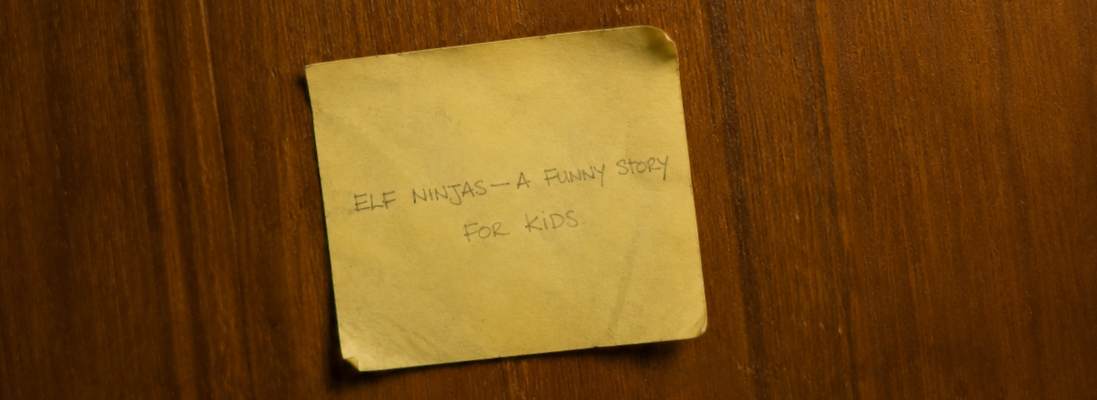
But as I stepped into our messy kitchen and saw the pile of dishes in the sink, reality anchored me back to my life. So before getting my hands wet, I found a Post-it and wrote: ELF NINJAS—A FUNNY STORY FOR KIDS. I stuck it to the back of my bedroom door and promised myself I would write that story before I forgot it.
Since I became a mother, every idea, every project, every undertaking had disappeared beneath dishes, laundry, and everybody else’s needs. I didn’t want this one to fizzle out with the others.
But it did.
That note was covered by bags and hats—lost and forgotten for years.
Until three years ago… It found me.
I couldn’t remember the story at all. But I remembered the promise. That scribbled promise eventually became my first children’s book:The Elf Ninjas Save Christmas.
The answer is yes, and it matters more than most realize. Let’s break down copyright basics, the meaning behind my little signature mark, why the Copyright Notice is important to creators.
What is Copyright? Copyright is a legal right that gives the author control over how others use their work. It belongs to the person who created something (a photograph, story, or poem), and protects that work from being copied, shared, or used without the creator’s permission. There are a few limited exceptions (e.g., fair use), but in general, if someone wants to use your work, they need your permission.
Here, I’m keeping things simple and focusing on literary works (poems, stories, and blog posts). But copyright goes beyond. It applies to any original work that’s fixed in a tangible form, meaning it’s written down, recorded, saved, or otherwise captured in a physical or digital format.
However, writers must understand: ideas alone are not protected under copyright law. Only the original expression of those ideas are covered. So, if you write a story about vampires, pink dragons, witches, or talking cars, it’s the story itself (the structure, language, scenes, and dialogue) that’s protected. Not the general idea of your characters.
Copyright protection depends on how you develop and express those ideas, not the themes or concepts themselves. Think of it this way: there are countless books about dragons, right? Still, you can still write your own without infringing. Even if you invent a totally unique dragon, only your specific expression of that dragon in your story is protected. The idea of a pink dragon with yellow horns that sings opera is not protected — only the way you write it.
When does this right begin? The moment you create something and save it in a physical or digital way. Whether you write it down on paper, save it on your computer, or record it — you automatically own the copyright. You don’t need to file anything or fill out forms. For example, when you write a blog post or poem— the right is yours the second you hit save. Copyright protects your ownership from that moment.
Here’s the key: you can’t file a copyright infringement lawsuit unless your work is registered.
If my work is already protected, why register it? It’s true, copyright exists the moment your work is created and saved. But registering it gives you real legal power. You can’t sue for copyright infringement unless your work is registered (this is a big one). Early registration lets you claim statutory damages and attorney’s fees, and it creates a public record that helps protect your rights.
In short: registration isn’t required, but if you want full protection, it’s a smart move.
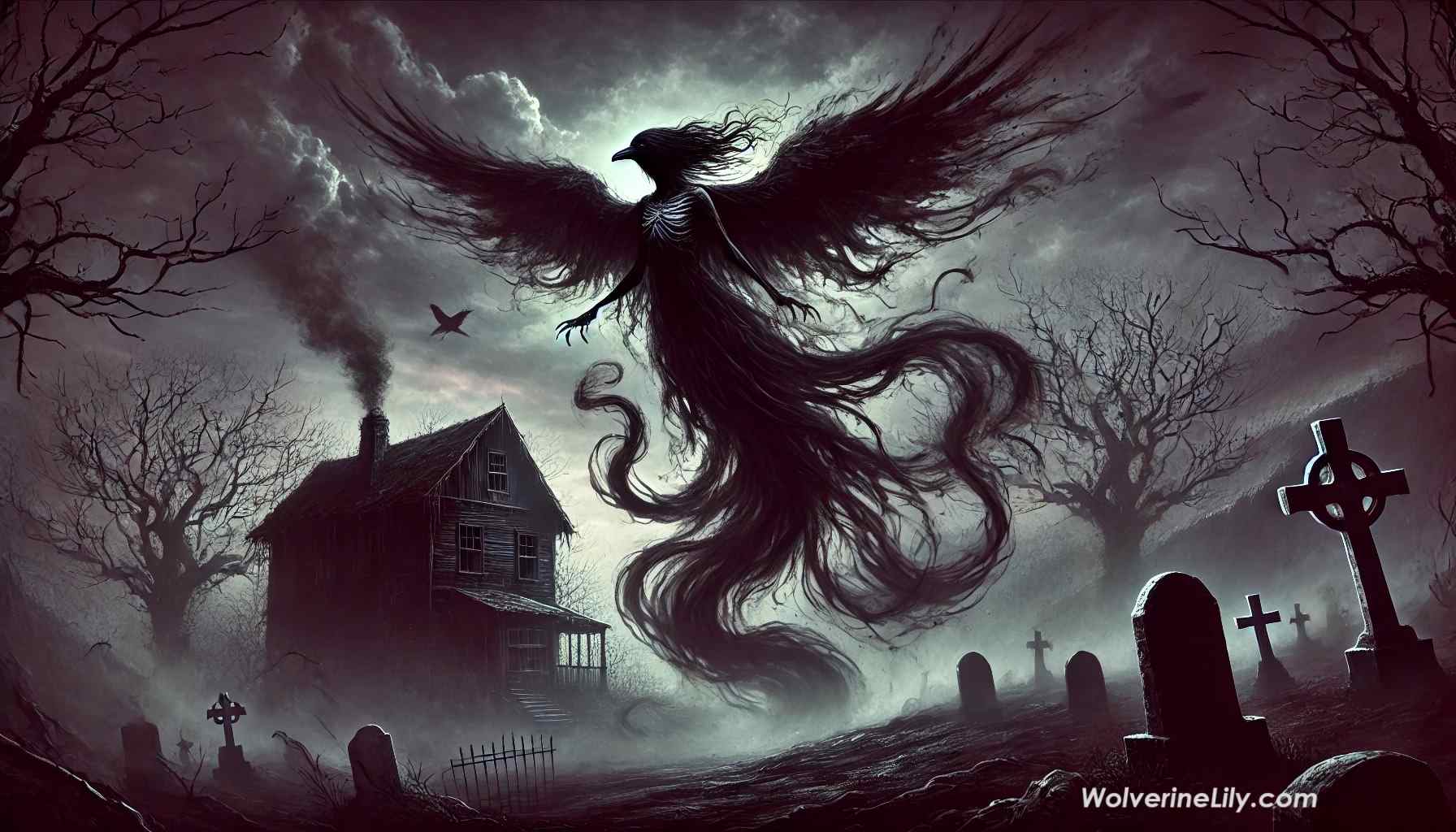
NOTE: I wanted to share an update on the latest chapter! In this excerpt, things take a dark turn as a raven descends, transforming into something far more sinister. Who—or what—is the woman emerging from the darkness? As I’ve mentioned before, the story is full of secrets, and this is yet another one for Nayah to uncover. Will she? Stay tuned for more as the story unfolds. I’ll share more soon! For now, I’d love to hear what you think.
The evening cast a somber veil over the landscape. The final, waning rays of the sun painted the sky in bruised hues of purple and gray. Nayah’s house stood isolated, surrounded by a forest of lifeless trees. Silence hung heavily in the air.
Then, the stillness was broken.
A dark shape descended from the obscured sky, a raven slicing through the dimming light with sharp precision. Its black wings beat the air with unnatural force, as though fueled by a dark essence, pulsing from hellfire itself. As it dropped rapidly, its form began to shift grotesquely, expanding not just in appearance but in actual size. It landed at the edge of the porch steps, a faint thud echoing across the silent ground.
The bird’s form contorted and stretched. Feathers dissolved into a swirling vortex of darkness. The murky mass writhed and grew, the silhouette of the infernal bird stretching taller and more distinct. Its wings spread wide, morphed elongating into human arms as the shadows reshaped into the body of a woman.
The transformation was monstrous and mesmerizing, unfolding with chilling inevitability. The figure solidified. Black and gray hair unfurled from the now human-like head. Yet, her movements were fluid and deliberate, exuding an unnatural elegance and confidence, as though she commanded the very darkness around her.