This blog is a reflection of my unpredictable journey through life, full of Dreams, Humor and Surprises! I write poems to heal, prose to consolidate my thoughts, and stories to entertain. I like to write about love because it’s a beautiful thing that everyone seeks. Whether you're looking for a comforting read or a burst of laughter, my blog offers a little bit of everything, as I navigate the wonderful chaos of life. I share insights on parenting, poetry, health, fitness, and more. Feel free to reach out!
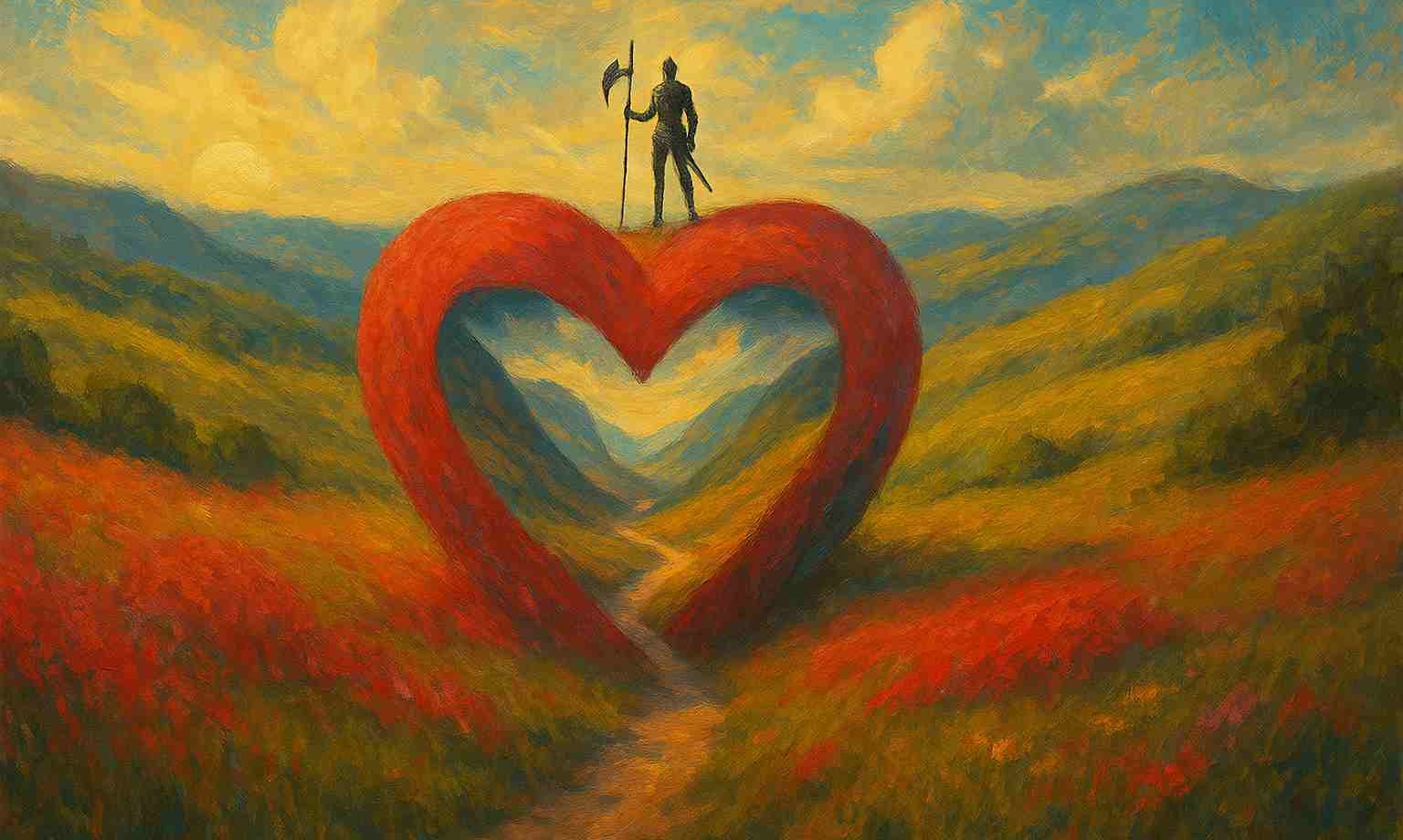
Atop my heart, where its two hills bend inward, lies the valley.
You sit astride— a stubborn knight, neither advancing, nor dismounting.
Why do you remain?
I never invited you, fearing your sword, its blade honed on our silence. I left the wicket ajar— a slit to watch you— watching me.
But three kin torches at my gate— scorched your sight, ignited your fear. You fled like a coward, left my depths unclaimed. Your halberd scraped my hollow; its echo—a cathedral bell, tolling the coarse-silk wound.
Or is it me— my longing—a magnet latching your armor, stabbing me?
It’s me. I refused to let you go. I stranded your ghost in this valley. Its shroud blinds me.
Author’s Note: I usually don’t let people in. Writing breaks that habit. I composed this poem with a specific notion, then thought about this blog—like a wicket slit opening to strangers. It’s where I create, think, and process. Sometimes poems crack my gate wide. I chose to share this one—probably for that very reason. Yet lately, I find myself questioning the purpose of this space at all.
If I revealed my raw self to you, peeled the makeup, stripped the cloth from my body, Bare— unfolding every crease carved in silence by time— the eternal butcher, dragging a dull blade across my skin.
Would you meet my eyes, lock them in yours, and embrace all I surrender? Or would your gaze slip, chasing youth in someone else?
Would your fingers trace the map my face has become, my eyes—Sirius at midnight— guiding you into the gorge where I’ve buried all my love?
If you leaned closer, beyond the façade of scars, you’d hear the crackle. Would you let its warmth burn through your defenses?
Yet, if you falter and turn away, my heart—a resilient pendulum, will endure stabs of every sway. With or without your love, in all that I am, I will remain.
Author’s Note: This piece took nearly a year to complete. It demanded brutal honesty, many attempts and revisions. It’s about aging, the courage to face it, and the fire of love that refuses to die—even when love itself has long been buried. For anyone who’s felt this way: this is for you. Only a few will understand.
I’ll probably tweak it again someday, but for now, this is it.
Would you let your child sign a contract with a corporation that profits from her/his image, tracks their location, collects their data, and limits your ability to sue in court?
No? Then, you must understand what happens when your child begins to scrolls.
One click = a legally binding contract.
That’s all it takes to hand over their digital rights and, sadly, yours.
My daughter is almost twelve, and she’s been begging for a phone. “Everyone has it,” she says. But I grew up without one, so one question keeps bugging me: Is my child old enough for what’s coming through that screen? Because, let’s be honest, a phone today isn’t just a device to make a call. It’s an admission ticket to a digital universe! It’s a portal into an adult internet, strangers, cryptic algorithms, and hidden contracts.
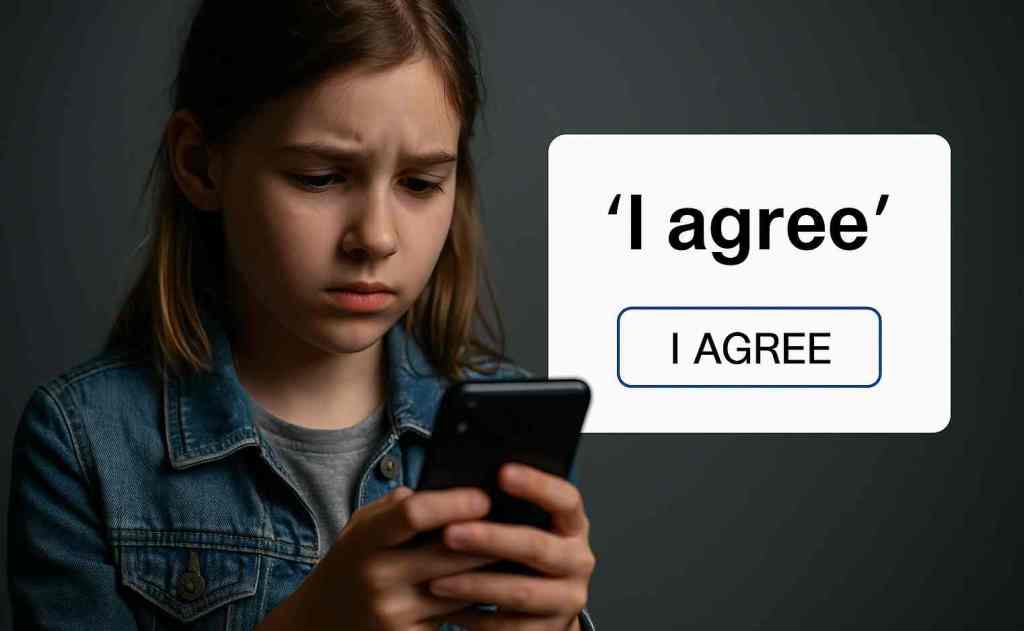
What scares me the most is access to the unknown. Even if I forbid certain applications, she will eventually install social media because all kids do! And although platforms like Instagram, TikTok, and Snapchat require users to be at least 13, it’s incredibly easy for children to bypass this rule. Kids lie about their birthdate. No parental verification nor ID checks exist, so one click—”I agree”—gets them in.
But wait, does anyone ever read what they agree to? Most adults never do, so we can’t expect kids to read the terms.
Yet, this one blind click binds them into a legal contract with the platform, permitting the app to access their phone and track their location. Moreover, it limits the ability to sue the company in court, often forcing you into private arbitration, even for potential privacy violations.
Moreover, this “I agree” click opens the door to instant feeds—the content parents may disapprove of: perverse images, violent or sexually provocative clips, and strangers that may influence your child more than we wish for. Sadly, neither you nor your child have much control over the screen. The platform’s algorithm decides what shows up.
Once the account is live, multiple predators have a direct line to your child through comments, likes, or an instant DM. You might think their profile is private, but most platforms still allow message requests from strangers—and your child might not even know what’s safe to open.
The Children’s Online Privacy Protection Act (COPPA) is a federal law that’s supposed to protect kids under 13 from online data collection. Other laws, like consumer protection rules, unfair practice regulations, and even state-level privacy acts, also apply to kids and social media platforms. Still, most platforms aren’t verifying anything, and much of the responsibility lands in parents’ hands.
So, how old should your child be to get a cell phone?
I don’t have all the answers. But if they have one, check it regularly. See what apps they’ve installed. Look at who they follow and what’s showing up in their feed. Talk to them, even if they roll their eyes.
Finally, before we hand over the phone, we need to understand the rules and consequences that come with it. Read the terms. Because once they say “I agree,”—it’s a contract.
It was a mid-summer day. The sky was as gray as a billionaire’s suit, and the sun refused to show its smile.
A pounding echoed through Amy’s apartment. “One second,” Amy called, barely cracking open the door. Dressed in shorts and a t-shirt, she juggled the door knob and battled her rebel hair with her free hand.
“What are you doing here so early?” she squinted at the familiar face. “Early? It’s almost eleven,” Dan replied, nudging the door open and striding in as if he owned the place. Clearly, he was no stranger to Amy’s apartment or her couch.
“Yeah, but do you remember how late you dropped me off last night? I went to bed at ‘this morning o’clock’.” Amy yawned, trailing Dan to the living room.
She peeked outside, noticing the sky screaming an overcast mess. “This isn’t beach weather, is it?” Amy observed the trees bending in the wind like a morning yoga pose gone wrong. “Nope. Looks like we’re not the only ones hungover. But we can do something else,” Dan suggested, already commandeering the remote.
“Coffee first. I need to wake up,” Amy declared, holding her index finger and heading to the kitchen. “And maybe a bagel?” Dan called, settling into the couch like it was his living room.
“How’s George? He ended up driving Rita home, right?” Amy’s voice floated over the sound of brewing coffee. “Did he? Man, he was smashed.” Dan flicked through channels. “I hate when he drives like that,” Amy muttered. “The party was nuts, and George got totally wrecked.” “Good for him. First big night since his breakup,” Dan replied. “I know. After everything with his ex…” She paused, considering a thought.
“Do you think he hit it off with Rita?” “What?” Dan’s eyes were glued to the TV. “Maybe he’s still at Rita’s?” Amy teased, walking back with two steaming cups of coffee. “You think they… no way. They just met,” Dan scoffed, accepting his cup. “I don’t know, I got a vibe,” Amy smirked, pulling out her Motorola flip-phone. “Let’s see.”
She dialed, putting on her best ‘Rita’ voice. “Hi George, did I wake you? Just wanted to thank you for last night…” Dan’s eyebrow arched in surprise as he listened to Amy’s voice, a perfect imitation of Rita’s, turning more flirtatious with every word.
“Are you busy tonight?” There was a long pause. George talked while Amy was nodding. “We should totally go rollerblading later.” Amy winked at Dan, who was watching her with his jaw wide open. “Great. Pick me up at 5.” A short pause. “Okay, see you then.”
Dan nearly spit his coffee. “He can’t think you’re actually Rita, can he?” Amy hung up, a mischievous glint in her eyes. “He’s got a rollerblading date with ‘Rita’ at 5 tonight.” “No way. He fell for it?” Dan laughed loud and hard, disbelief coloring his tone. “This is gold!”
*
George parked his Altima outside a modest single-story house, the smallest on the block, with a well-tended lawn surrounding it. He checked his hair in the rearview mirror and headed for the door.
It was exactly 5 o’clock. He rang the bell and waited with anticipation. “Hi,” Rita greeted him, not stepping aside to let him in. “Hi, ready for rollerblading?” George asked, his body shifting nervously from one foot to another. “Rollerblading?” Rita looked puzzled. “No, I can’t. I’ve got other plans. You should have called earlier…”
George’s face fell as he stood awkwardly at her doorstep, mixed feelings swirling within him.
Both stared at each other in silence for a moment. Something was off. “But you called me about it this morning…” “I didn’t call you today at all,” Rita frowned. Flustered, George apologized and retreated to his car. What else could he do? His anticipation dissolved into a confusing blend of disappointment and embarrassment.
He was about to start his car when his phone rang. “Rollerblading, huh?” Amy teased.
George groaned. “It was you? I thought Emily set me up.” “Nope, all me. Sorry, George, I got carried away. I owe you a big apology—I’ve gone too far.” Amy’s voice softened, yet she struggled to stop laughing. “I can’t believe you fell for this!”
George shook his head, even though Amy couldn’t see him.
“Come over, I’m ordering pizza,” Amy added. George sighed. He couldn’t decide whether he should scream with anger or laugh. He put the key in the ignition and drove off.
Amy and Dan couldn’t stop cracking up as they awaited George’s arrival to clear the air and get a full story.
“You two watch out; just wait for my comeback,” George grumbled as he walked in. “I’m warning you. You have no idea what is coming at you,” he announced, unable to suppress a smile at the absurdity of it all. “I mean it.”
“Good to see you without your rollerblades,” quipped Amy, extending her arms to hug George. “Please, don’t be mad at me.”
“You ordered pizza; I brought beer,” said George with a smile, closing the door behind.
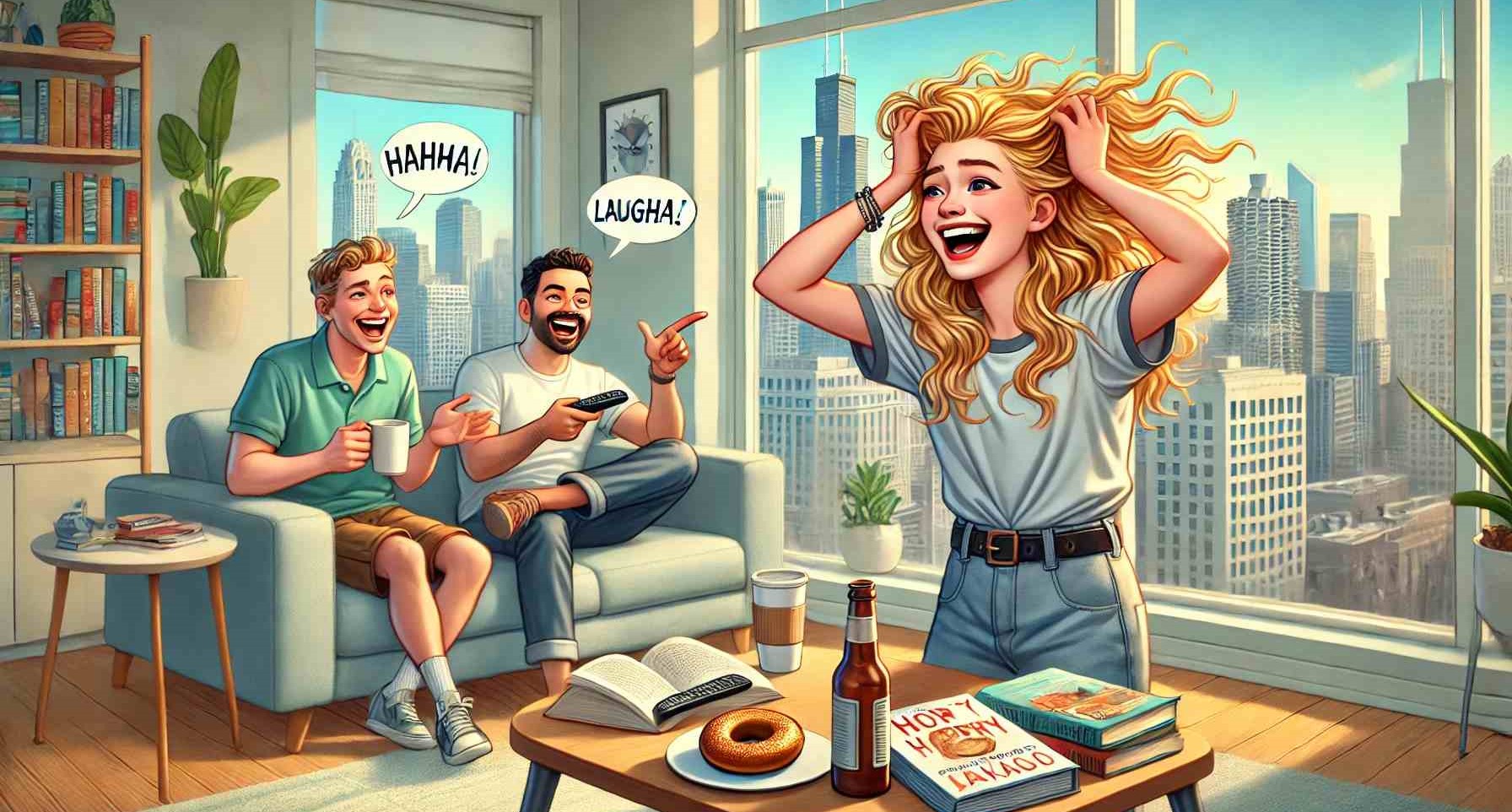
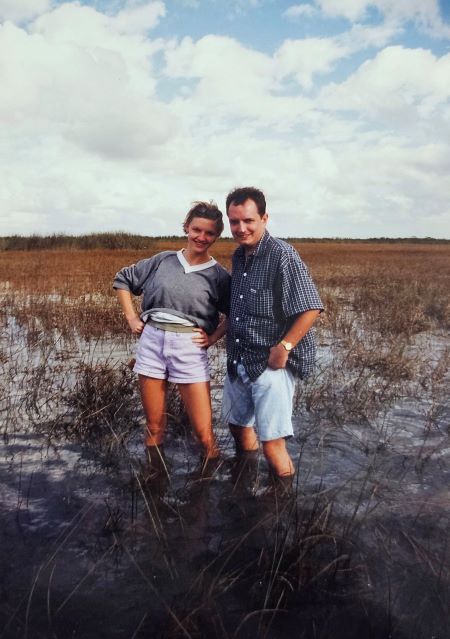
Author’s Note: Meet the real Amy and George—they are actual people. In fact, I’m Amy, and George is my friend Matt. This is the only picture I could find of us from many years ago. We are standing in water, awaiting alligators (at least that’s what the tour guide told us). What you don’t see is the boat on the other side, filled with a bunch of ‘chickens’ too scared to step out, including Dan, who took this picture. And finally, yes, I really did set up that rollerblading prank date. 🙂
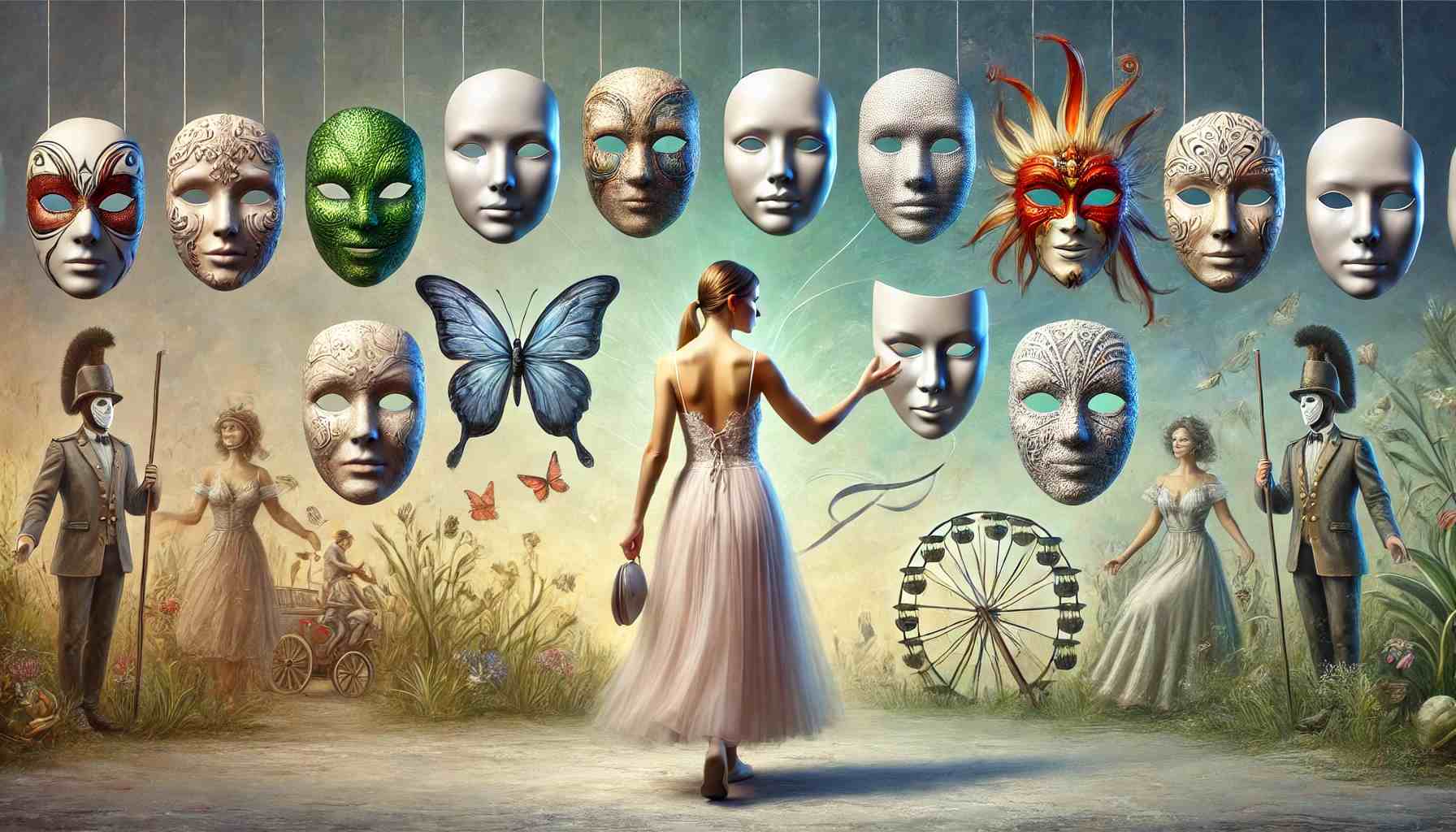
In life’s grand masquerade, I wear masks—shifting my personalities, like a chameleon’s skin, I adapt to awaiting expectations.
At work, wielding expertise and proficiency, stiff and stern— a façade of demanded service that pleases strangers.
To my parents, I forge a mask of obedience, an armor fitted since childhood, showcasing to the world their efforts.
For my children, the heaviest mask of all— painted with disciplined example, woven with warm patience, a mosaic of unconditional love.
Among friends, I wear humor—my most popular mask, highly demanded, like a jester spinning witty tales to amuse the crowd, a bright light beams through a kaleidoscope, scattering laughter across every face. This favored mask serves me well; but I shed it when alone.
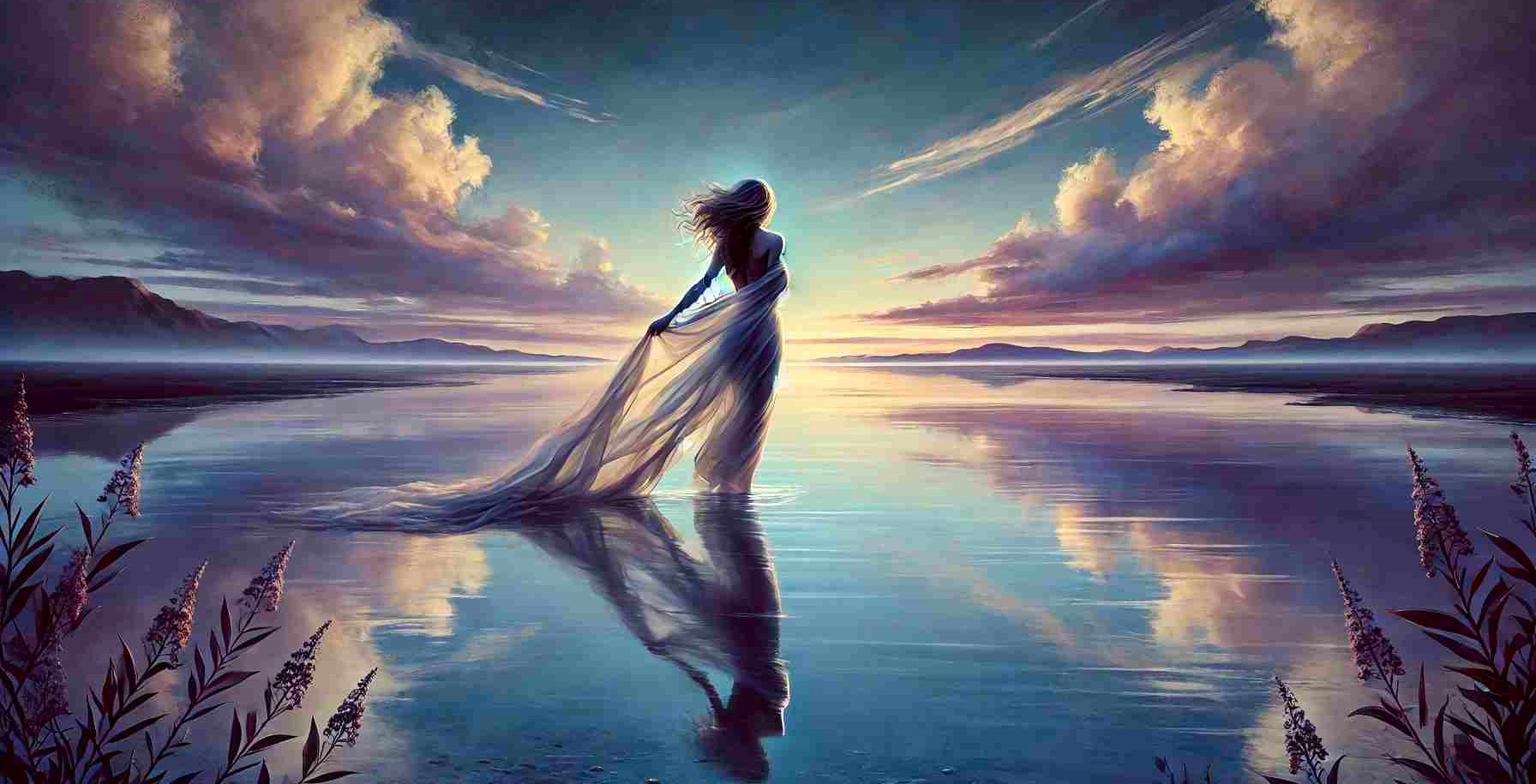
If you peel off these masks, layer by layer, you’ll find my bare face at last. My eyes: mirrors of my heart, a clear, silent lake… See me.
Unbound, unguarded, unmasked—the real me. Cleansed by the rain of purity, I rediscover my forgotten contours distorted by layers of duty.
For my husband, I hide behind the thinnest mask— a dissolving mist, still he filters what he wishes to see, like a lens zooming in on a single detail, blind to the truth beneath my transparent disguise.
My masks exhaust me; like heavy chains, they weigh me down.
Yet, the ludicrous carnival endures— A hollow parade of fleeting extravagances: temporary delights and shallow possessions—soon forgotten.
Each costumed soul quietly yearns for rescue, rebelling against the imposed pretenses— all longing for gentle affection: to be seen and loved.
So, I ask you this: What mask shall I wear for you, Monsieur? Or dare to meet me unmasked, heart open, soul bare?
If you’ve read this far, you’ve glimpsed beyond my masks. Would you come closer, strip off yours— eye-to-eye, no veils between us?
Behind the ramparts of this masquerade, I stand—will you rise to find me?
Author’s Note: This poem has been on my mind for a long time. It reflects the roles we play in life—often without even realizing it. We wear masks to please others, feeding their endless demands, and in doing so, we lose ourselves. We don’t just project a false image—we surrender fragments of our identity, becoming puppets bound by the strings of others’ expectations.
From childhood, we’re trained to follow directions and meet society’s expectations, as though we must live for someone else, constantly under the lens of judgment. This disconnect creates a lack of authentic connections, yet the yearning for genuine affection stays in our hearts.
Another layer of this poem explores the tendency to seek validation through material possessions. Many hide behind fancy items and designer labels, projecting an illusion of worth. Beneath the surface, these illusions often overshadow one’s true value. Like hollow mannequins draped in overpriced clothes, they project their worth through price tags.
We’ve all worn masks at some point to fit in—it’s part of being human. Nevertheless, I think that everyone has something authentic to offer, but not everyone is willing to believe in it and embrace their uniqueness.
I have no intention of changing who I am for others, but I’ve learned to adjust my behavior when necessary—like it or not.
When does the masquerade end? Perhaps it ends when we cut the strings and dare to stand unmasked—naked, trembling in the panic of inconvenient reality, yet finally free!
Life is too short to dance to someone else’s tune!
Finally, it was my birthday last week. Birthdays have a way of sparking reflection, don’t they? This one felt particularly powerful for me. Like a wake-up call, it urged me to think deeply about the kind of life I truly want to live—and the masks I must drop. 🎭
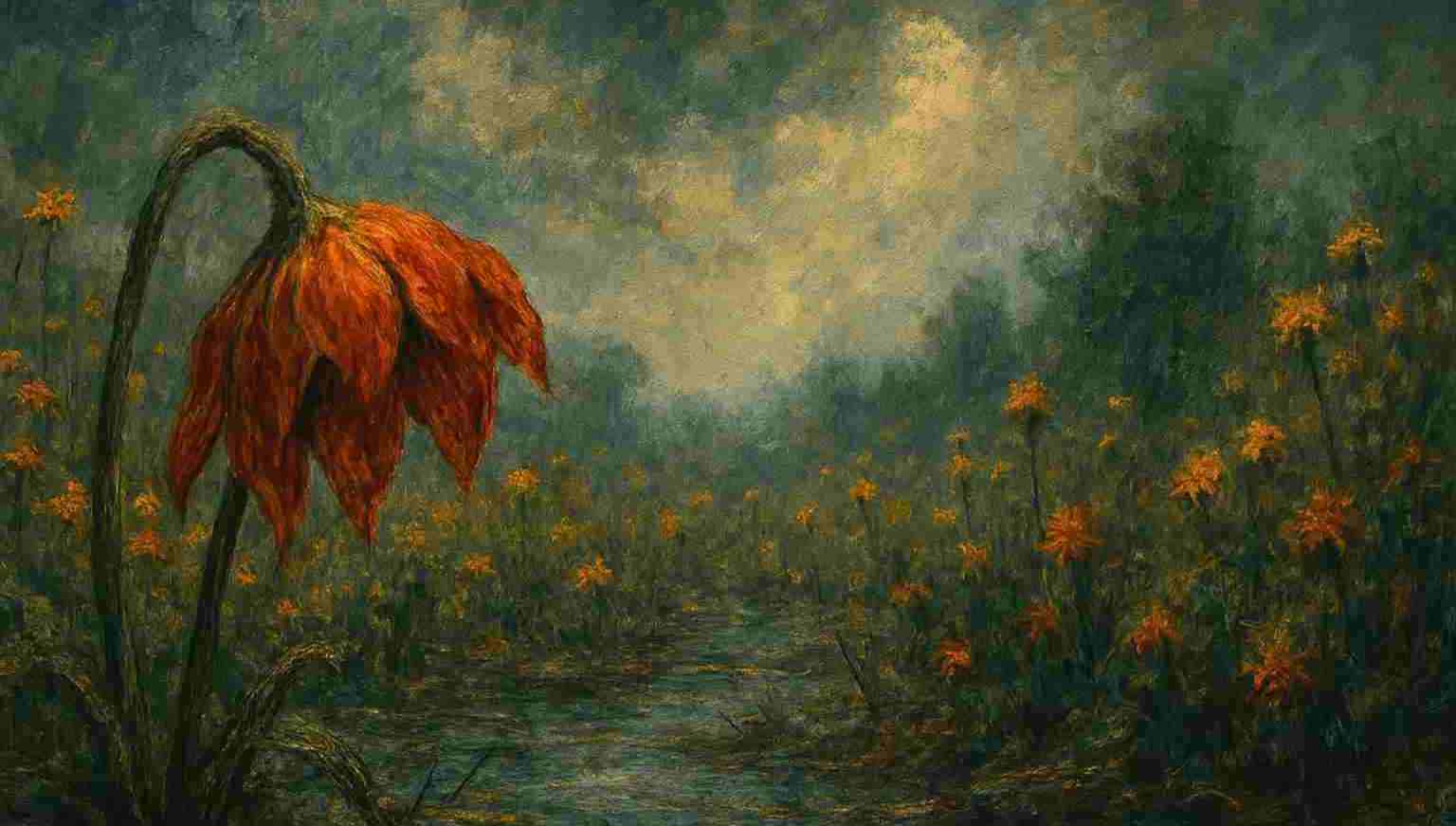
I was meant to bloom— unfurl, sing, and shine, not be tended or trimmed, not molded for duty and possession.
I was meant to bloom, not decorate an entropic cave, not drizzle in vain someone’s emptiness with the sweetness of my effervescent petals— infusing their spoiled, sour strands.
Even in the drought, I drank rainbows through my veins. My tendrils breathed warmth into soil, while the sky hid behind clumped clouds. I stretched toward muffled sunlight.
I was meant to bloom.
And then it rained, not to nourish or cleanse. Poured. Unstoppable— the ground swelled, my petals sagged, roots dislodged, my garden drenched to swamp.
Yet I stand, sturdy but hollow. They nest in my shade, leech my youth, and — call it love.
Slowly, quietly, I sink.
Still—
Dreaming of butterflies, even a wilt can reach the sun. Single ray ignites its desire.
Butterflies will come And I will bloom… as I was always meant to.
Author’s Note: Not everyone who stands tall is thriving. Not every flower is there for you to pick. For every time you bloomed in silence, offered too much, or were mistaken… This one is personal. 🌸
The answer is yes, and it matters more than most realize. Let’s break down copyright basics, the meaning behind my little signature mark, why the Copyright Notice is important to creators.
What is Copyright? Copyright is a legal right that gives the author control over how others use their work. It belongs to the person who created something (a photograph, story, or poem), and protects that work from being copied, shared, or used without the creator’s permission. There are a few limited exceptions (e.g., fair use), but in general, if someone wants to use your work, they need your permission.
Here, I’m keeping things simple and focusing on literary works (poems, stories, and blog posts). But copyright goes beyond. It applies to any original work that’s fixed in a tangible form, meaning it’s written down, recorded, saved, or otherwise captured in a physical or digital format.
However, writers must understand: ideas alone are not protected under copyright law. Only the original expression of those ideas are covered. So, if you write a story about vampires, pink dragons, witches, or talking cars, it’s the story itself (the structure, language, scenes, and dialogue) that’s protected. Not the general idea of your characters.
Copyright protection depends on how you develop and express those ideas, not the themes or concepts themselves. Think of it this way: there are countless books about dragons, right? Still, you can still write your own without infringing. Even if you invent a totally unique dragon, only your specific expression of that dragon in your story is protected. The idea of a pink dragon with yellow horns that sings opera is not protected — only the way you write it.
When does this right begin? The moment you create something and save it in a physical or digital way. Whether you write it down on paper, save it on your computer, or record it — you automatically own the copyright. You don’t need to file anything or fill out forms. For example, when you write a blog post or poem— the right is yours the second you hit save. Copyright protects your ownership from that moment.
Here’s the key: you can’t file a copyright infringement lawsuit unless your work is registered.
If my work is already protected, why register it? It’s true, copyright exists the moment your work is created and saved. But registering it gives you real legal power. You can’t sue for copyright infringement unless your work is registered (this is a big one). Early registration lets you claim statutory damages and attorney’s fees, and it creates a public record that helps protect your rights.
In short: registration isn’t required, but if you want full protection, it’s a smart move.
The fire was dying—just a few driftwood sticks crackling low on the sand, surrounded by scattered rocks and shells. Embers exhaled their pulsing glow as the sun sank beyond the horizon, spilling its fading citrus warmth across the beach. Kalia sat before it. Her legs crossed at the ankles, knees pulled tight in, and chin resting atop them. The small urn cradled in her hands felt heavier than it should have. It held grief and years of unanswered questions. Too many. She asked, but her father always found a way to evade her, slipping into silence like a wisp of smoke. And now he was gone. The truth was cremated with him inside this urn. Tears burnt her eyes, blurring the darkening clouds reflected in distant waters. The dusky sky quietly mirrored the inevitable present.
It was time.
She stood. A quiet breeze swept from behind, pushing her forward. Kalia stepped into the silver arc of wave. Her trembling hands opened the urn and tipped it. For a moment, the ashes swirled on the wind, but then a sudden gust lifted them again. In an instant, like a mini-tornado, the ashes twisted into a spiraling column of light, churning with a brilliant glow.
Kalia’s lungs locked. This contradicted her belief about scattering ashes. Perhaps the wind was playing tricks on her—in its own way, saying goodbye. But the ashes began to gather. A face formed in the air, then a body. Her father. He stood before her, just as she remembered—whole.
Kalia froze. Her heart hammered against her ribs. “You look like you’ve seen a ghost,” he said at last, a knowing smile tugging at his lips. The voice was his, but—it wasn’t. “What took you so long? I told you to release my ashes during the full moon, but I didn’t mean next year!” He chuckled, but there was something urgent in his tone. “I—” She couldn’t finish. “Did you think I’d died?” His grin widened, flashing familiar teeth. “Didn’t you?” she finally whispered, her eyes wide. “Well, not exactly. But I can’t explain everything right now.” His expression turned serious. “I am a Sepharine, Kalia. I couldn’t tell you during my time as a human, but now—I must leave you the key.” He gestured around them. “Take care of our kingdom.”
The tide stilled. The air didn’t move. Even the wind seemed to hold. “Let the low tide guide you, and the full moon illuminate your way.” “What?” she finally mumbled, even though she wasn’t sure if this was real. “What key?” His face flickered and began to fade, scattering to ashes once more. “Wait—what kingdom? Dad—” “Don’t waste your time,” his voice echoed as the ocean roared back to life. A wave crashed against the rocks, its spray catching the remnants of ashes and pulling them into the sea.
Kalia stood motionless. Had she really seen her father? Heard his voice? Or was it just another dream—like the ones that haunted her since the funeral? She lifted her gaze. A full moon stared back—rising. This was real. She closed her eyes and breathed in the salty air, searching for clarity.
A low, intermittent clicking interrupted her concentration. A gentle but distinct tik-tik-tik intruded into the sound of waves. Kalia scanned the beach and spotted an emerald frog with iridescent wings. It leaped energetically along the shore, leaving soft prints on wet sand.
Kalia watched the hops with surging anticipation. The frog stopped in front of her, locking its amber eyes with hers. For a moment, none of them moved. The frog’s throat pulsed gently and its delicate wings shimmered softly in orange. Suddenly, the amphibian’s slick tongue shot forward—not to snatch prey, but to deliver something. Kalia flinched, noticing the silvery gleaming at her feet. The frog swiftly pulled its tongue back in. Then it blinked once and hopped toward the sea.
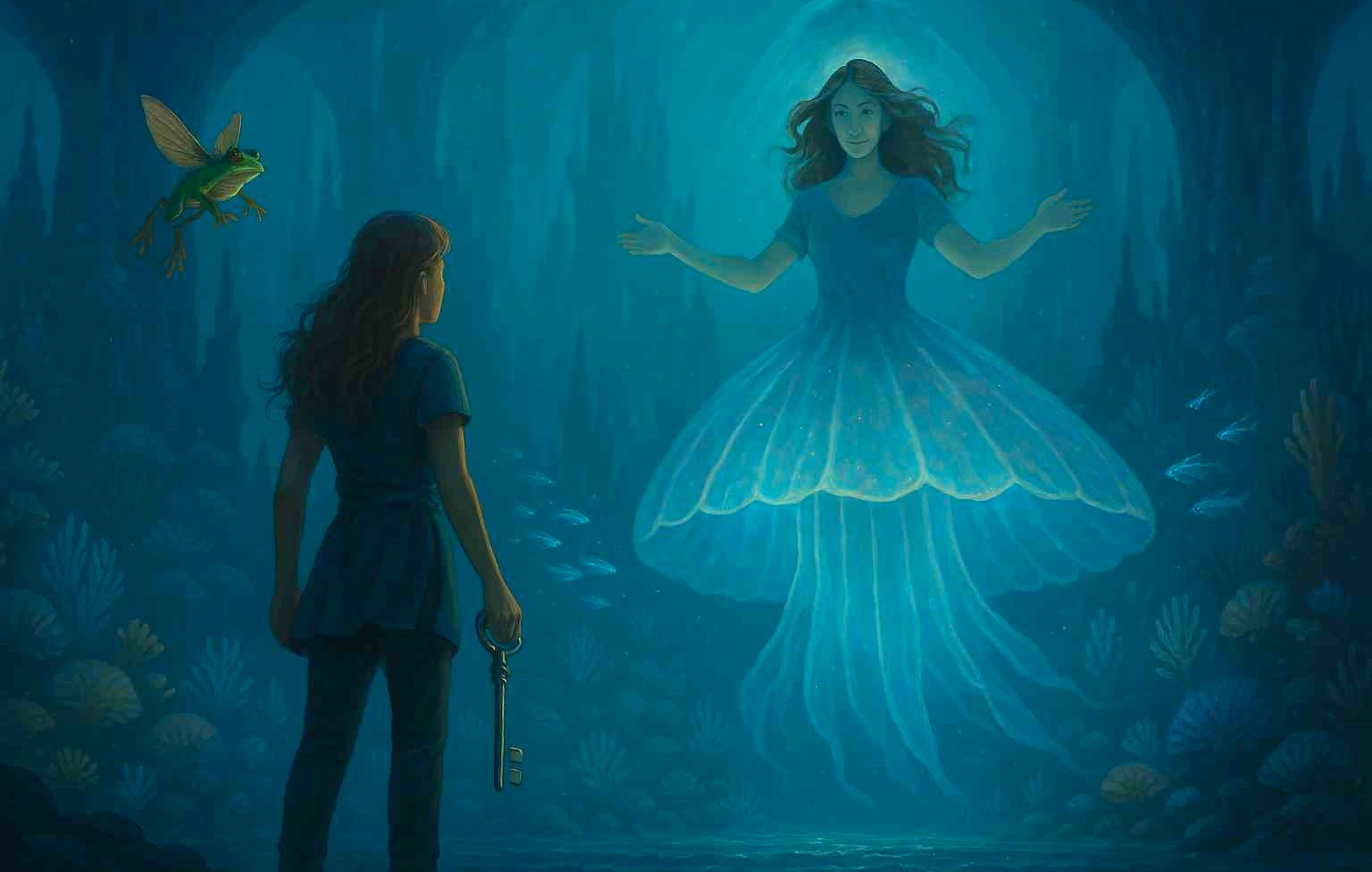
Kalia knelt and reached for the object. It was an oversized key. This must be the key her father mentioned, she thought. It felt much heavier than she expected. And it was unusually warm—almost hot. She stepped into water, trailing the frog’s leaps.
Let the full moon illuminate the gate, she recalled. Without thinking twice, Kalia dipped her foot in the moonlight’s reflection in water—a stretched silvery triangle shimmering like a floating lunar shawl. She immersed the other foot and touched something. A stair. Then another.
Suddenly, the water began to part. The waves split in halves, rising up into walls on both sides. Breathless, Kalia descended until she saw a massive anemone swaying gently. The purple tentacles, as long as Kalia’s arms, pulsed—waving to her, inviting her closer. The anemone’s mouth opened, revealing a crystal-blue hallway. Kalia stood rooted, yet she couldn’t resist leaning closer. She peeked inside the grand foyer, where the sapphire walls and ceiling bathed in luminous tranquility.
A gigantic jellyfish emerged, uncurling gracefully into a woman from the waist up. “Welcome home, Kalia.” She spoke melodically with a smile, showing pearl-bright teeth. Her jelly-skirt pulsed with divine elegance, mirroring her brown hair, floating with delicate grace. Kalia was captivated. This place felt like a familiar fairy tale. “We’ve been waiting for you,” the jelly girl added, stretching her arms.
Kalia remembered her father telling her stories about a magical underwater world with mystical creatures and luminescent corals. This was what he had described. In her childhood mind, it was only a bedtime story. But now it was real. She slipped in.
The air was moist, radiating with crystal blues—the living heart of the sea itself. Towering coral spires extended upward like guarded cathedrals, emitting gentle light. A school of electric blue fish passed by, leaving behind trails of silver stardust. Starfish and anemones pulsed with color.
But something was off. Random dark patches dimmed the glow. The kingdom was fading.
The jelly girl danced and spun happily, despite dark spots spilled like black ink on her skirt. “I’m Tessa, your sister. Father told me so much about you.” Kalia’s lips parted in disbelief. She had always wanted a sibling—but a half-jellyfish wasn’t exactly what she’d imagined. “Sister?” she whispered. Tessa laughed softly. “Believe me, I wasn’t thrilled you have legs.” She rolled her skirt and flipped above Kalia’s head. “That’s what makes up a family. It’s never what you expect, but somehow what you need.” “Dad never told me…” Kalia shook her head, unconvinced. “He couldn’t tell you everything. But he shared a lot. And there is so much to talk about.” Tessa positioned herself in front of Kalia—face to face. “I am truly glad you’re here, Kalia. I’ve waited so long. You’re exactly as I hoped.”
There was honesty and sincerity in Tessa’s eyes. She lowered her head in silence for a while. “Sepharis breathes life into the ocean. Through our glow, youth and balance flow into Earth.” Tessa’s voice filled with painful intensity. “But our world is dying. We rely on rainwater from the Sapphire Oak, a rare tree. It contains the substance that gives us our glow and vitality. Even a few drops could restore Sepharis.” She paused, looking Kalia in the eyes. “None of us here can survive in your world for long. It’s been too long since our father’s last delivery.”
Kalia remembered a childhood story about a magical tree growing at the foot of the mountains. But until now, she thought the unique quality of its moisture following rain was just fantasy. Meanwhile, her father had educated her through fascinating tales. “You need me to get the rainwater from that tree?” Kalia questioned hesitantly. “Our father’s soul is tormented and will not rest until Sepharis is healed,” Tessa continued. “Only Sepharians can extract the moisture from the tree, and only the one with the key can enter our kingdom… Father chose you.” “Why? What am I?” Kalia’s breath shortened. She thought she was about to faint. “You are a Sepharine, just like your father. You can survive underwater longer than others. But you are also partly human.”
Kalia staggered back. She recalled a childhood boat accident. Her mother drowned, yet Kalia survived. Doctors called it a miracle. It all made sense—she could hold her breath longer than anyone she knew.
A sudden, sharp vibration rushed through the air, sending a shiver through the glowing kingdom. Tessa began to shrink, curling her human body back into the top bump of a jellyfish. Her glow flickered in neons—a warning sign. “The tide turns. Kalia, you must leave.” “No, I have questions—” Kalia didn’t move. “The gate will seal. We won’t survive another moon cycle. Go now!” Tessa urged.
The kingdom trembled. The anemone’s door began to shut. Tessa folded like an umbrella and unfurled with massive power, forcing Kalia outside the gate. A final whisper: “Please, help us.” A wave ripped Kalia backward. All lights vanished. The ocean roared around her. Then fell silent.
Kalia woke on the beach. Sand clung to her clothes and skin. The rising sun peeked through billowing clouds, sending its warm rays across the peaceful water. Her father’s urn rested in the sand beside her. Memories of last night rushed back in. It was the most bizarre dream, she thought.
Kalia rose to her knees, feeling the discomfort of the cold. But something was in her hand. The silver key—bigger and shinier than any other.
The kingdom was real.
She looked at the mountains and thought of her father disappearing during storms. He was a Sepharine with a purpose—whatever it might have been. And now it was hers. She had to save Sepharis and let her father’s soul rest.
She looked up. Gray clouds gathered in the distant sky. “The rain is coming,” she whispered. “I must find that tree.” She turned sharply and strode off.
Behind the trees, three men with binoculars watched her. “It’s her,” one whispered. “She has it in her hand.” “The glowing jelly trace on her leg confirms it. Classification: Lumenflora—AeQ-3,” said the second with distinct precision. “We can’t lose her,” the third ordered, sliding his binoculars into his uniform pocket.
Don’t judge the book by the cover. And don’t judge people by… their feet!
Let me tell you a story about one bone that invaded many lives (including mine), with one heck of an attitude—almost literally.
A bunion. Not a cute name for not a cute bone. Apparently, it’s very common among women. And, with age, it becomes more pronounced—in medical terms. But in plain English: it’s annoying and ugly.
Unlike the onion, you can’t peel off its layers. But it sure can make you cry! Bunion with a B for the Brute—a Brutal Bone! Not a B for “Beautiful.” Rather, a Bitch, relentless and rebellious, that often takes center stage in my life.
When it first peeked years ago, I thought it was a sixth toe about to hatch. Yet, many Easters went by and still no ugly ducklings—just five toes and one fat ‘plumpy’ egg.
So why not cover it with shoes?
But what type of footwear can accommodate this deformation? Thought of that?
Summers are terrible: a season of Toezillas storming in the sun. Forget flip-flops on the beach. It’s like Mount Toeverest on full display. Massive and entirely unapologetic. Unconquerable.
Strappy sandals are even worse because bunions always find a way to poke through the straps. They’re like little rhinoceroses, busting out of cages through the bars, claiming their freedom.
Shoe shopping is a disaster. Nothing fits! It’s not like I’m picky—Ms. Bunion is! She deprives me of stylish choices! Constantly interfering and always getting her way. Flats? If the cut isn’t deep enough, Everest gets sliced by the edge. Pointy shoes? It’s like walking in a funnel. I’d rather stick my foot in a blender.
And don’t get me started on the fancy devices promising miracles. The commercials scream: “correct alignment,” “overnight relief,” and “back to beautiful feet.” Lies! I’ve tried them all. I’ve imprisoned my foot into toe spreaders, medieval-looking separators, nighttime braces that make you stomp like Frankenstein on heels. I even bought something called a “bunion boot” once. It looked like a snow tire attached for punishment.
I remember standing on a beach last summer, when my friend casually glanced at my foot and said, “You’ve got one of those big bones. My mom had that.” I laughed it off saying, “Yup, I do. I can’t do anything about it.”
And that’s when the story flipped.
I have no control over my anatomy, but I have the mind-power to decide how I feel about it.
I’m done feeling embarrassed! I’ve decided to give my bunion the spotlight it demands. I mean, it’s been fighting for attention for years, right?
Why do we try so hard to hide something that clearly wants to stand out? Maybe that bone was never meant to be covered. What if it’s not a deformity—but a declaration?
In ancient Greece, a high forehead was associated with wisdom and intelligence. Large ears were believed to signify wisdom and attentiveness. In some East Asian cultures, elongated earlobes are considered a sign of longevity and good fortune. A prominent nose has been linked to strength of character and leadership, especially in Roman and Greek depictions of emperors and gods. In China, women bound their feet to make them smaller because that was considered beautiful. A long neck symbolized elegance in African cultures. Thick lips indicated sensuality and fertility, especially if you were channeling your inner goddess. And if your second toe was longer than your big toe, congratulations—you were born a leader.
For centuries, people found meaning in every curve, dip, and dimple of the human body. But somehow, the bunion has been left out. No legends… or at least I haven’t found any. Why? Because it was meant for embarrassment and discomfort? No, because nobody had assigned it a magical meaning.
What if the bunion is not a flaw—but a secret sign? A mark of resilience or a fighting spirit? If this bone can endure years of bad shoes, public toe-shaming, and test gadgets from late-night infomercials, it’s clearly not just a bone—it’s a warrior!
I’m calling it the “Woman who can walk through fire.” It’s time the bunion had its myth. Beauty has always been subjective—a performance.
So the next time you notice someone stare, just confidently say, “Yeah, I’ve got a superpower.” Because you do, so own it—with style, sass, and just a hint of bad-ass Toezilla.
Author’s Note: This piece may look familiar, but like passion itself, poetry evolves. I removed the unrefined version a while ago because it felt unfinished, incomplete. I let it fully breathe, then reshaped it—until it became what it was always meant to be. This is the latest version, more final. Though still… insatiable. 🙂



 Wolverine Lily