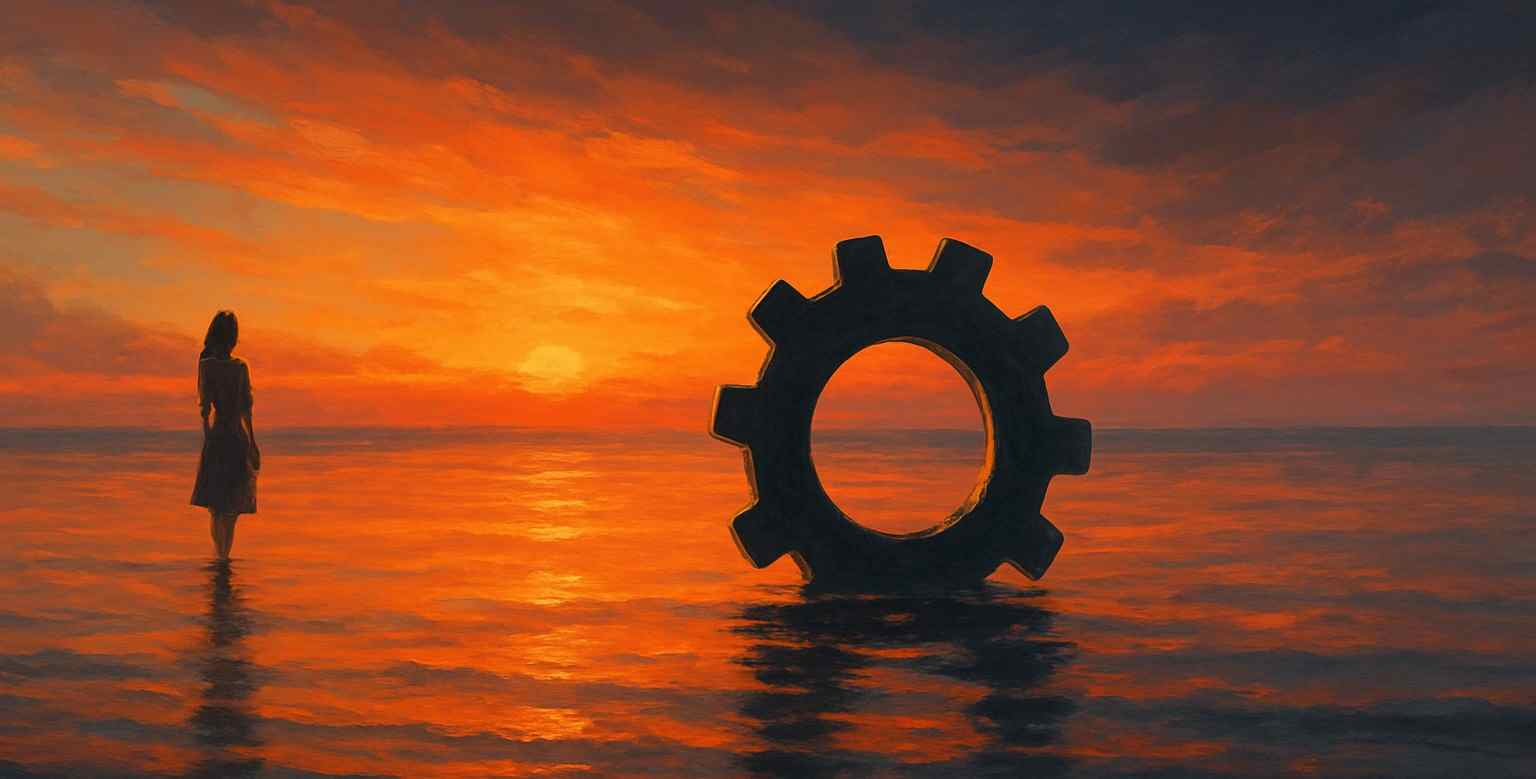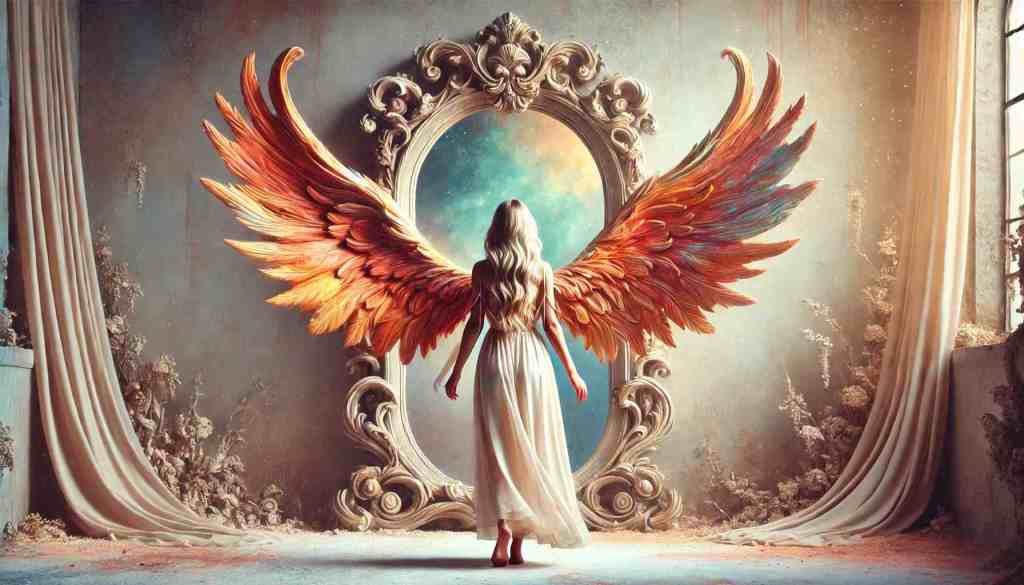
A chair stands on four legs, not two (it would topple), not six (too heavy, too crowded). Four: graceful and balanced.
Obedient lumber, bearing their weight. Mute. Pushed, dragged, stacked. But its comfort wasn’t enough. Humans craved labor.
So they harnessed a horse: a living engine steaming in the sun, lean muscle and stentorian breaths, groomed and geared. Yet, its flesh grew tired, the horse’s pain inconvenienced men.
So they built a machine: pistons for lungs, steel for bones, engines for heartbeats— a restless body with no tears.
But a mother remained: straining on two legs, bearing like a chair, laboring like a horse, loaded past capacity.
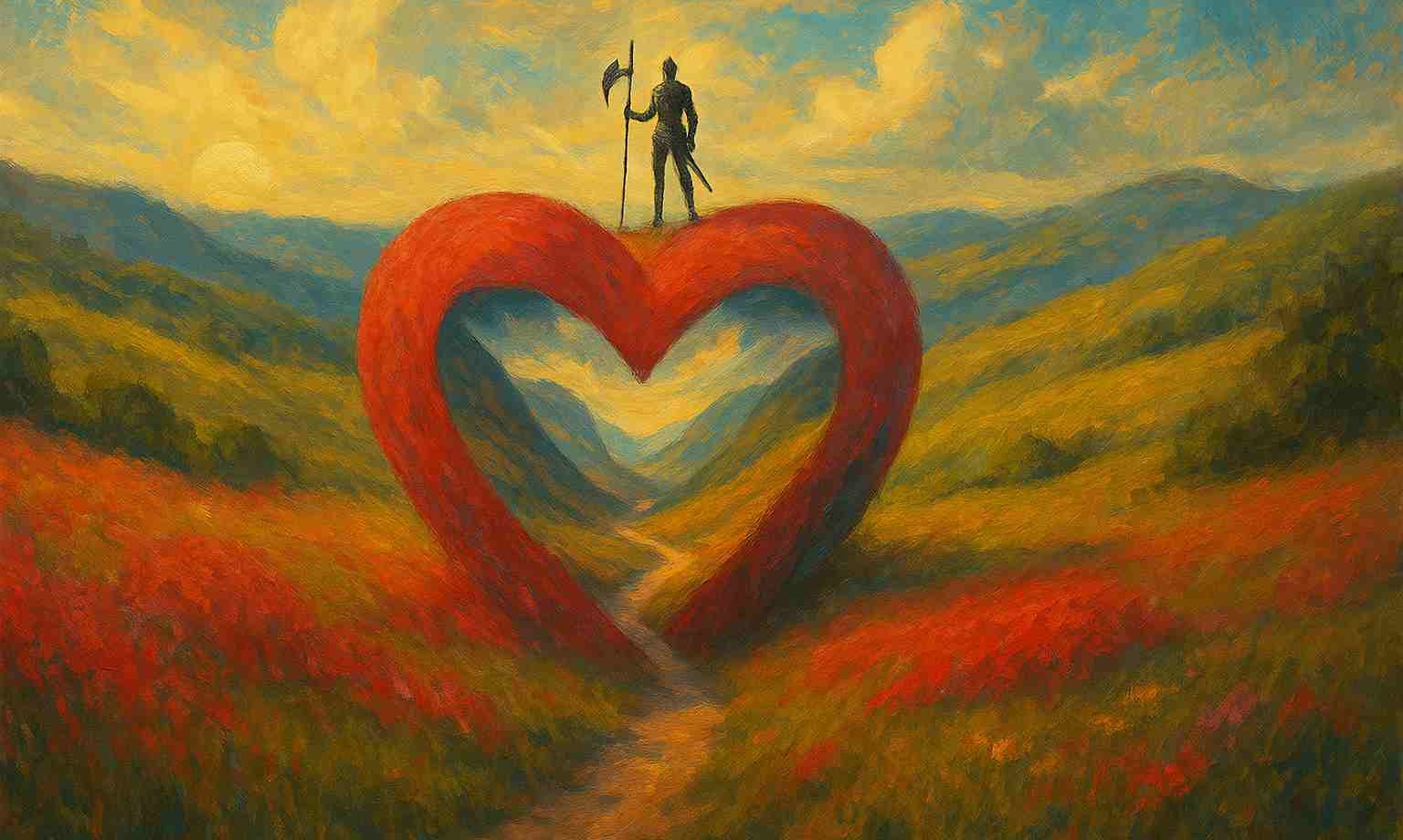
Atop my heart, where its two hills bend inward, lies the valley.
You sit astride— a stubborn knight, neither advancing, nor dismounting.
Why do you remain?
I never invited you, fearing your sword, its blade honed on our silence. I left the wicket ajar— a slit to watch you— watching me.
But three kin torches at my gate— scorched your sight, ignited your fear. You fled like a coward, left my depths unclaimed. Your halberd scraped my hollow; its echo—a cathedral bell, tolling the coarse-silk wound.
Or is it me— my longing—a magnet latching your armor, stabbing me?
It’s me. I refused to let you go. I stranded your ghost in this valley. Its shroud blinds me.
Author’s Note: I usually don’t let people in. Writing breaks that habit. I composed this poem with a specific notion, then thought about this blog—like a wicket slit opening to strangers. It’s where I create, think, and process. Sometimes poems crack my gate wide. I chose to share this one—probably for that very reason. Yet lately, I find myself questioning the purpose of this space at all.
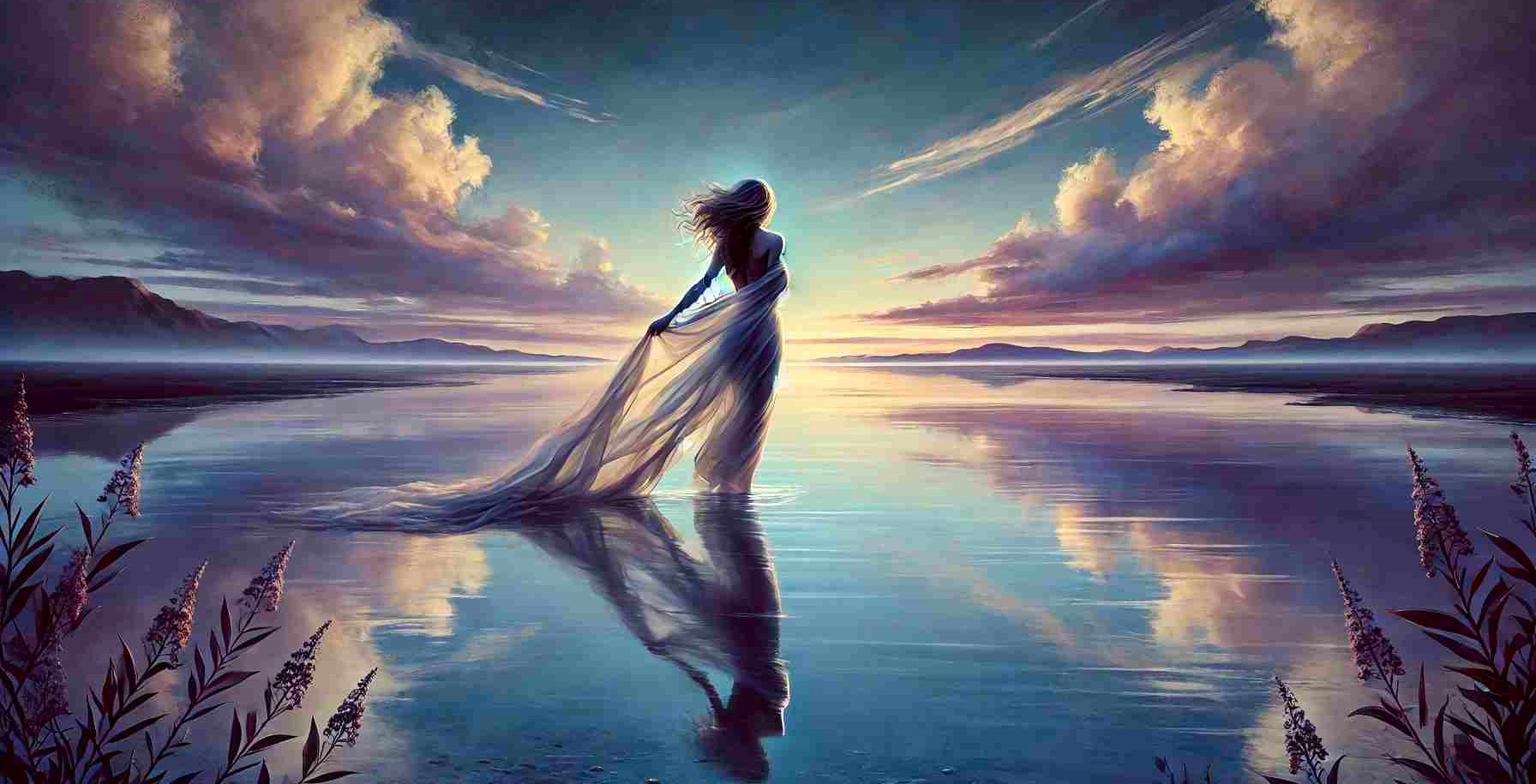
If I revealed my raw self to you, peeled the makeup, stripped the cloth from my body, Bare— unfolding every crease carved in silence by time— the eternal butcher, dragging a dull blade across my skin.
Would you meet my eyes, lock them in yours, and embrace all I surrender? Or would your gaze slip, chasing youth in someone else?
Would your fingers trace the map my face has become, my eyes—Sirius at midnight— guiding you into the gorge where I’ve buried all my love?
If you leaned closer, beyond the façade of scars, you’d hear the crackle. Would you let its warmth burn through your defenses?
Yet, if you falter and turn away, my heart—a resilient pendulum, will endure stabs of every sway. With or without your love, in all that I am, I will remain.
Author’s Note: This piece took nearly a year to complete. It demanded brutal honesty, many attempts and revisions. It’s about aging, the courage to face it, and the fire of love that refuses to die—even when love itself has long been buried. For anyone who’s felt this way: this is for you. Only a few will understand.
I’ll probably tweak it again someday, but for now, this is it.
I was meant to bloom— unfurl, sing, and shine, not be tended or trimmed, not molded for duty and possession.
I was meant to bloom, not decorate an entropic cave, not drizzle in vain someone’s emptiness with the sweetness of my effervescent petals— infusing their spoiled, sour strands.
Even in the drought, I drank rainbows through my veins. My tendrils breathed warmth into soil, while the sky hid behind clumped clouds. I stretched toward muffled sunlight.
I was meant to bloom.
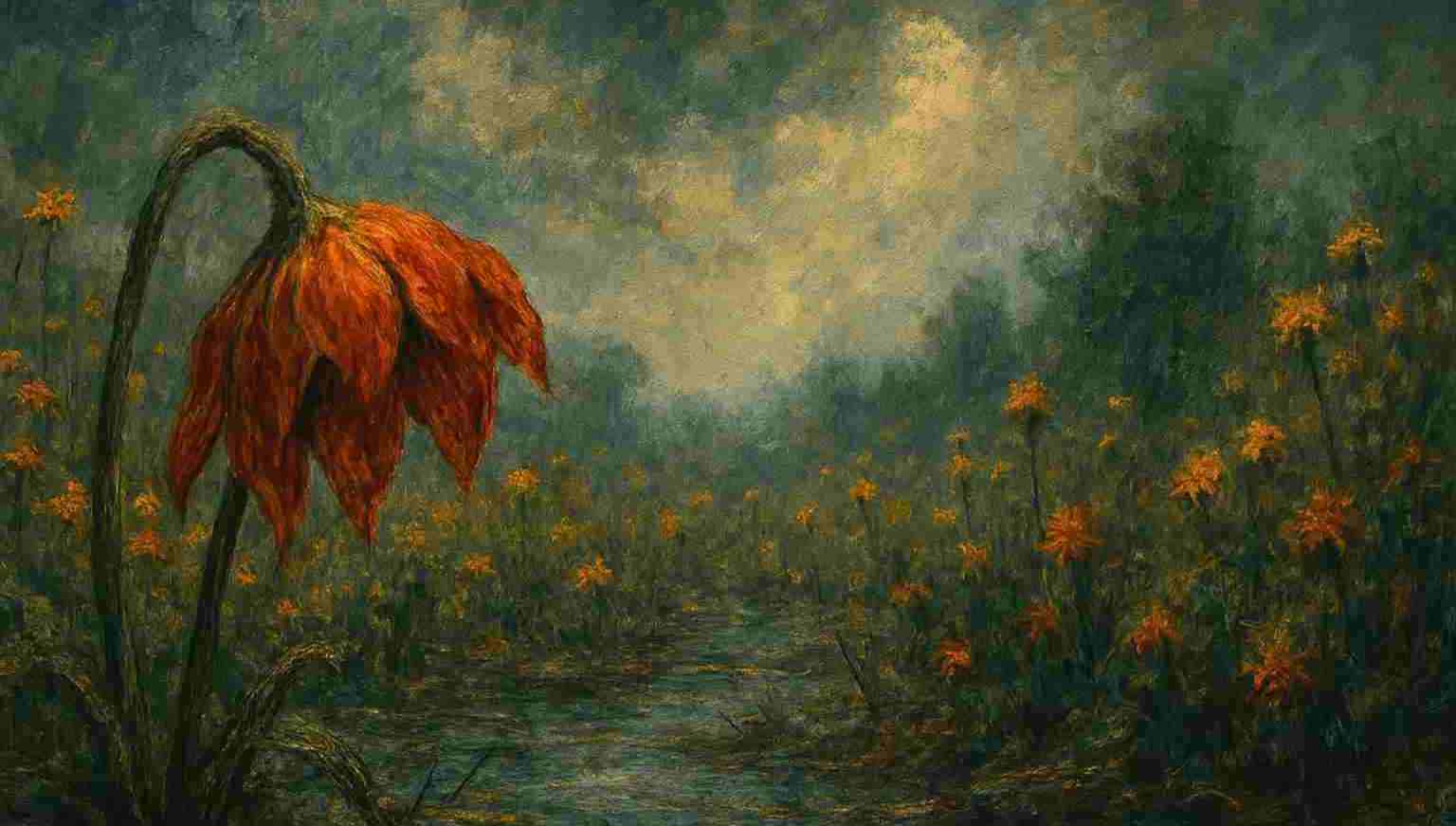
And then it rained, not to nourish or cleanse. Poured. Unstoppable— the ground swelled, my petals sagged, roots dislodged, my garden drenched to swamp.
Yet I stand, sturdy but hollow. They nest in my shade, leech my youth, and — call it love.
Slowly, quietly, I sink.
Still—
Dreaming of butterflies, even a wilt can reach the sun. Single ray ignites its desire.
Butterflies will come And I will bloom… as I was always meant to.
Author’s Note: Not everyone who stands tall is thriving. Not every flower is there for you to pick. For every time you bloomed in silence, offered too much, or were mistaken… This one is personal. 🌸
The fire was dying—just a few driftwood sticks crackling low on the sand, surrounded by scattered rocks and shells. Embers exhaled their pulsing glow as the sun sank beyond the horizon, spilling its fading citrus warmth across the beach. Kalia sat before it. Her legs crossed at the ankles, knees pulled tight in, and chin resting atop them. The small urn cradled in her hands felt heavier than it should have. It held grief and years of unanswered questions. Too many. She asked, but her father always found a way to evade her, slipping into silence like a wisp of smoke. And now he was gone. The truth was cremated with him inside this urn. Tears burnt her eyes, blurring the darkening clouds reflected in distant waters. The dusky sky quietly mirrored the inevitable present.
It was time.
She stood. A quiet breeze swept from behind, pushing her forward. Kalia stepped into the silver arc of wave. Her trembling hands opened the urn and tipped it. For a moment, the ashes swirled on the wind, but then a sudden gust lifted them again. In an instant, like a mini-tornado, the ashes twisted into a spiraling column of light, churning with a brilliant glow.
Kalia’s lungs locked. This contradicted her belief about scattering ashes. Perhaps the wind was playing tricks on her—in its own way, saying goodbye. But the ashes began to gather. A face formed in the air, then a body. Her father. He stood before her, just as she remembered—whole.
Kalia froze. Her heart hammered against her ribs. “You look like you’ve seen a ghost,” he said at last, a knowing smile tugging at his lips. The voice was his, but—it wasn’t. “What took you so long? I told you to release my ashes during the full moon, but I didn’t mean next year!” He chuckled, but there was something urgent in his tone. “I—” She couldn’t finish. “Did you think I’d died?” His grin widened, flashing familiar teeth. “Didn’t you?” she finally whispered, her eyes wide. “Well, not exactly. But I can’t explain everything right now.” His expression turned serious. “I am a Sepharine, Kalia. I couldn’t tell you during my time as a human, but now—I must leave you the key.” He gestured around them. “Take care of our kingdom.”
The tide stilled. The air didn’t move. Even the wind seemed to hold. “Let the low tide guide you, and the full moon illuminate your way.” “What?” she finally mumbled, even though she wasn’t sure if this was real. “What key?” His face flickered and began to fade, scattering to ashes once more. “Wait—what kingdom? Dad—” “Don’t waste your time,” his voice echoed as the ocean roared back to life. A wave crashed against the rocks, its spray catching the remnants of ashes and pulling them into the sea.
Kalia stood motionless. Had she really seen her father? Heard his voice? Or was it just another dream—like the ones that haunted her since the funeral? She lifted her gaze. A full moon stared back—rising. This was real. She closed her eyes and breathed in the salty air, searching for clarity.
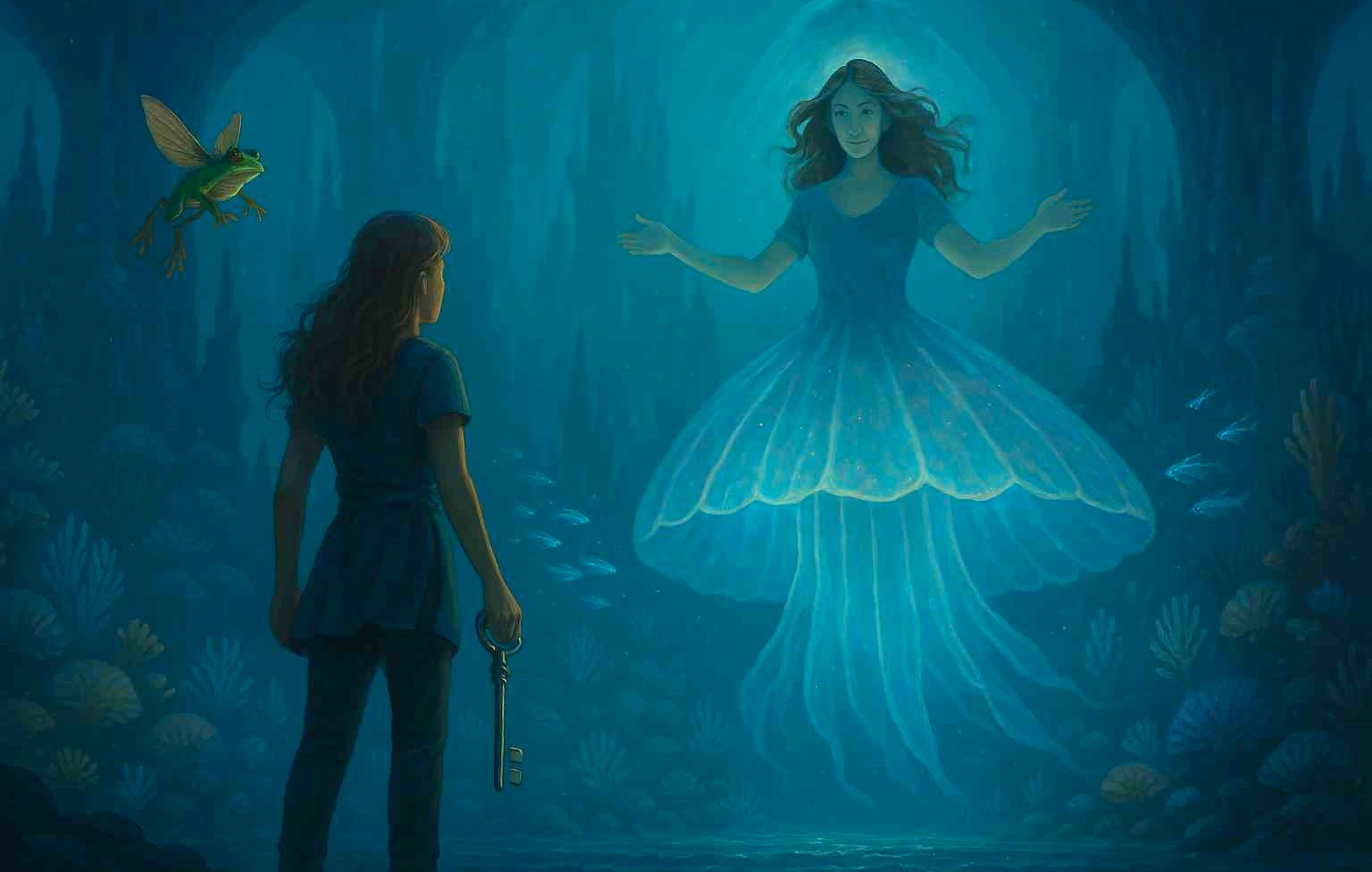
A low, intermittent clicking interrupted her concentration. A gentle but distinct tik-tik-tik intruded into the sound of waves. Kalia scanned the beach and spotted an emerald frog with iridescent wings. It leaped energetically along the shore, leaving soft prints on wet sand.
Kalia watched the hops with surging anticipation. The frog stopped in front of her, locking its amber eyes with hers. For a moment, none of them moved. The frog’s throat pulsed gently and its delicate wings shimmered softly in orange. Suddenly, the amphibian’s slick tongue shot forward—not to snatch prey, but to deliver something. Kalia flinched, noticing the silvery gleaming at her feet. The frog swiftly pulled its tongue back in. Then it blinked once and hopped toward the sea.
Kalia knelt and reached for the object. It was an oversized key. This must be the key her father mentioned, she thought. It felt much heavier than she expected. And it was unusually warm—almost hot. She stepped into water, trailing the frog’s leaps.
Let the full moon illuminate the gate, she recalled. Without thinking twice, Kalia dipped her foot in the moonlight’s reflection in water—a stretched silvery triangle shimmering like a floating lunar shawl. She immersed the other foot and touched something. A stair. Then another.
Suddenly, the water began to part. The waves split in halves, rising up into walls on both sides. Breathless, Kalia descended until she saw a massive anemone swaying gently. The purple tentacles, as long as Kalia’s arms, pulsed—waving to her, inviting her closer. The anemone’s mouth opened, revealing a crystal-blue hallway. Kalia stood rooted, yet she couldn’t resist leaning closer. She peeked inside the grand foyer, where the sapphire walls and ceiling bathed in luminous tranquility.
A gigantic jellyfish emerged, uncurling gracefully into a woman from the waist up. “Welcome home, Kalia.” She spoke melodically with a smile, showing pearl-bright teeth. Her jelly-skirt pulsed with divine elegance, mirroring her brown hair, floating with delicate grace. Kalia was captivated. This place felt like a familiar fairy tale. “We’ve been waiting for you,” the jelly girl added, stretching her arms.
Kalia remembered her father telling her stories about a magical underwater world with mystical creatures and luminescent corals. This was what he had described. In her childhood mind, it was only a bedtime story. But now it was real. She slipped in.
The air was moist, radiating with crystal blues—the living heart of the sea itself. Towering coral spires extended upward like guarded cathedrals, emitting gentle light. A school of electric blue fish passed by, leaving behind trails of silver stardust. Starfish and anemones pulsed with color.
But something was off. Random dark patches dimmed the glow. The kingdom was fading.
The jelly girl danced and spun happily, despite dark spots spilled like black ink on her skirt. “I’m Tessa, your sister. Father told me so much about you.” Kalia’s lips parted in disbelief. She had always wanted a sibling—but a half-jellyfish wasn’t exactly what she’d imagined. “Sister?” she whispered. Tessa laughed softly. “Believe me, I wasn’t thrilled you have legs.” She rolled her skirt and flipped above Kalia’s head. “That’s what makes up a family. It’s never what you expect, but somehow what you need.” “Dad never told me…” Kalia shook her head, unconvinced. “He couldn’t tell you everything. But he shared a lot. And there is so much to talk about.” Tessa positioned herself in front of Kalia—face to face. “I am truly glad you’re here, Kalia. I’ve waited so long. You’re exactly as I hoped.”
There was honesty and sincerity in Tessa’s eyes. She lowered her head in silence for a while. “Sepharis breathes life into the ocean. Through our glow, youth and balance flow into Earth.” Tessa’s voice filled with painful intensity. “But our world is dying. We rely on rainwater from the Sapphire Oak, a rare tree. It contains the substance that gives us our glow and vitality. Even a few drops could restore Sepharis.” She paused, looking Kalia in the eyes. “None of us here can survive in your world for long. It’s been too long since our father’s last delivery.”
Kalia remembered a childhood story about a magical tree growing at the foot of the mountains. But until now, she thought the unique quality of its moisture following rain was just fantasy. Meanwhile, her father had educated her through fascinating tales. “You need me to get the rainwater from that tree?” Kalia questioned hesitantly. “Our father’s soul is tormented and will not rest until Sepharis is healed,” Tessa continued. “Only Sepharians can extract the moisture from the tree, and only the one with the key can enter our kingdom… Father chose you.” “Why? What am I?” Kalia’s breath shortened. She thought she was about to faint. “You are a Sepharine, just like your father. You can survive underwater longer than others. But you are also partly human.”
Kalia staggered back. She recalled a childhood boat accident. Her mother drowned, yet Kalia survived. Doctors called it a miracle. It all made sense—she could hold her breath longer than anyone she knew.
A sudden, sharp vibration rushed through the air, sending a shiver through the glowing kingdom. Tessa began to shrink, curling her human body back into the top bump of a jellyfish. Her glow flickered in neons—a warning sign. “The tide turns. Kalia, you must leave.” “No, I have questions—” Kalia didn’t move. “The gate will seal. We won’t survive another moon cycle. Go now!” Tessa urged.
The kingdom trembled. The anemone’s door began to shut. Tessa folded like an umbrella and unfurled with massive power, forcing Kalia outside the gate. A final whisper: “Please, help us.” A wave ripped Kalia backward. All lights vanished. The ocean roared around her. Then fell silent.
Kalia woke on the beach. Sand clung to her clothes and skin. The rising sun peeked through billowing clouds, sending its warm rays across the peaceful water. Her father’s urn rested in the sand beside her. Memories of last night rushed back in. It was the most bizarre dream, she thought.
Kalia rose to her knees, feeling the discomfort of the cold. But something was in her hand. The silver key—bigger and shinier than any other.
The kingdom was real.
She looked at the mountains and thought of her father disappearing during storms. He was a Sepharine with a purpose—whatever it might have been. And now it was hers. She had to save Sepharis and let her father’s soul rest.
She looked up. Gray clouds gathered in the distant sky. “The rain is coming,” she whispered. “I must find that tree.” She turned sharply and strode off.
Behind the trees, three men with binoculars watched her. “It’s her,” one whispered. “She has it in her hand.” “The glowing jelly trace on her leg confirms it. Classification: Lumenflora—AeQ-3,” said the second with distinct precision. “We can’t lose her,” the third ordered, sliding his binoculars into his uniform pocket.
Don’t judge the book by the cover. And don’t judge people by… their feet!
Let me tell you a story about one bone that invaded many lives (including mine), with one heck of an attitude—almost literally.
A bunion. Not a cute name for not a cute bone. Apparently, it’s very common among women. And, with age, it becomes more pronounced—in medical terms. But in plain English: it’s annoying and ugly.
Unlike the onion, you can’t peel off its layers. But it sure can make you cry! Bunion with a B for the Brute—a Brutal Bone! Not a B for “Beautiful.” Rather, a Bitch, relentless and rebellious, that often takes center stage in my life.
When it first peeked years ago, I thought it was a sixth toe about to hatch. Yet, many Easters went by and still no ugly ducklings—just five toes and one fat ‘plumpy’ egg.
So why not cover it with shoes?
But what type of footwear can accommodate this deformation? Thought of that?
Summers are terrible: a season of Toezillas storming in the sun. Forget flip-flops on the beach. It’s like Mount Toeverest on full display. Massive and entirely unapologetic. Unconquerable.
Strappy sandals are even worse because bunions always find a way to poke through the straps. They’re like little rhinoceroses, busting out of cages through the bars, claiming their freedom.
Shoe shopping is a disaster. Nothing fits! It’s not like I’m picky—Ms. Bunion is! She deprives me of stylish choices! Constantly interfering and always getting her way. Flats? If the cut isn’t deep enough, Everest gets sliced by the edge. Pointy shoes? It’s like walking in a funnel. I’d rather stick my foot in a blender.
And don’t get me started on the fancy devices promising miracles. The commercials scream: “correct alignment,” “overnight relief,” and “back to beautiful feet.” Lies! I’ve tried them all. I’ve imprisoned my foot into toe spreaders, medieval-looking separators, nighttime braces that make you stomp like Frankenstein on heels. I even bought something called a “bunion boot” once. It looked like a snow tire attached for punishment.
I remember standing on a beach last summer, when my friend casually glanced at my foot and said, “You’ve got one of those big bones. My mom had that.” I laughed it off saying, “Yup, I do. I can’t do anything about it.”
And that’s when the story flipped.
I have no control over my anatomy, but I have the mind-power to decide how I feel about it.
I’m done feeling embarrassed! I’ve decided to give my bunion the spotlight it demands. I mean, it’s been fighting for attention for years, right?
Why do we try so hard to hide something that clearly wants to stand out? Maybe that bone was never meant to be covered. What if it’s not a deformity—but a declaration?
In ancient Greece, a high forehead was associated with wisdom and intelligence. Large ears were believed to signify wisdom and attentiveness. In some East Asian cultures, elongated earlobes are considered a sign of longevity and good fortune. A prominent nose has been linked to strength of character and leadership, especially in Roman and Greek depictions of emperors and gods. In China, women bound their feet to make them smaller because that was considered beautiful. A long neck symbolized elegance in African cultures. Thick lips indicated sensuality and fertility, especially if you were channeling your inner goddess. And if your second toe was longer than your big toe, congratulations—you were born a leader.
For centuries, people found meaning in every curve, dip, and dimple of the human body. But somehow, the bunion has been left out. No legends… or at least I haven’t found any. Why? Because it was meant for embarrassment and discomfort? No, because nobody had assigned it a magical meaning.
What if the bunion is not a flaw—but a secret sign? A mark of resilience or a fighting spirit? If this bone can endure years of bad shoes, public toe-shaming, and test gadgets from late-night infomercials, it’s clearly not just a bone—it’s a warrior!
I’m calling it the “Woman who can walk through fire.” It’s time the bunion had its myth. Beauty has always been subjective—a performance.
So the next time you notice someone stare, just confidently say, “Yeah, I’ve got a superpower.” Because you do, so own it—with style, sass, and just a hint of bad-ass Toezilla.
Author’s Note: This piece may look familiar, but like passion itself, poetry evolves. I removed the unrefined version a while ago because it felt unfinished, incomplete. I let it fully breathe, then reshaped it—until it became what it was always meant to be. This is the latest version, more final. Though still… insatiable. 🙂
I don’t want to think what’s right— what’s right anymore?
I’ve been doing all the right things: behaved right, got the right degree, married the right guy…
Still, I ended up in the wrong place— or the wrong end of the right place, at most.
A precise blueprint, yet wayward— disarrayed, veering off the ideal design.
I’m incomplete. Misaligned.
Isn’t that right? For me—it’s wrong.
Why is it wrong? I did all the right things?
Why then, amidst all these rights, do I feel misplaced— a lucky penny lost in a dry desert, gleaming in the sun, yet inconspicuous in the sand— Blindly chasing paths marked right or wrong.
Incongruous.
Why is it wrong, doing what feels right?
I’m tempted to do what’s wrong— forbidden, There’s a thrill in rebellion, a treasure awaiting discovery in the shadows.
But what if it’s not wrong? And perhaps even right— right for me.
So, if I do wrong things, maybe at least I’ll finally feel right.
I stare into the mirror. I see myself—those worried eyes I know so well. “What do you fear?” I ask. “I’m afraid to take this step,” she replies. “Don’t. I’ll be with you holding your hand.”
She doesn’t trust me but begins to climb. Step by slow step. I watch her go up beyond my reach. My legs tremble. My heart pounds in my ears. She reaches the highest highs, I can barely see her.
“I’m scared,” she screams as she looks down. “How will I get down?” “Jump,” I encourage her. “Impossible! I will die!” “You won’t. I will catch you,” I assure.
She hesitates. “I can’t! I’m terrified!” she cries. “Just trust me,” I whisper. “If you fall, I’ll fall… with you.”
Her quivering feet slide to the edge, I catch my breath, She plunges into the unknown. First, like a rock tossed in the wind, Then she unfolds her arms— Delicate wings, unsure they will hold her, Yet she spreads them wide in growing confidence, As feathers grow from her skin.
I hint a smile and behold her glide, A bird soaring on a gale. I extend my arms into the air. “What if I can’t do this?” I doubt myself. Terror embraces me from behind. “If you fail, I fail too,” Her mutter echoes in my heart.
She lands within me, I ripple like a drop cascading into a lake, Peacefully blending into placid waters.
Was it her or me? Who truly made it?
I stare into the mirror. I see myself—those worried eyes I know so well. “What do you fear?” she asks. “I’m scared to take this step.” “Don’t. I’ll be with you holding your hand,” she replies.
I climb with trembling legs. She will catch me, she’ll find a way— As I once did. I’ll find my wings… Just as she once found hers.
Thank you for following along with Nayah’s story here.
After much thought, I’ve decided to delete chapter 4 and onward, and I won’t be posting the remaining chapters here. Instead, I plan to complete it as a novel. What began as a short story has grown into something much more extensive, and I’m both thrilled (and also terrified!) to turn Nayah’s journey into a full-length book—my first novel.
Nayah will uncover deep family secrets, including a cursed legacy, and unravel terrifying mysteries within the house she unexpectedly inherited. Her journey will be unforgettable, and I can’t wait to share her adventure with you—when the time is right.
In the meantime, I’m slowing down on blogging to focus on completing this project (and likely giving it a new title). That said, I might drop a poem or a funny story if I need a break from Nayah. 🙂
Thank you so much for your support—it truly means the world to me! Stay tuned for updates!