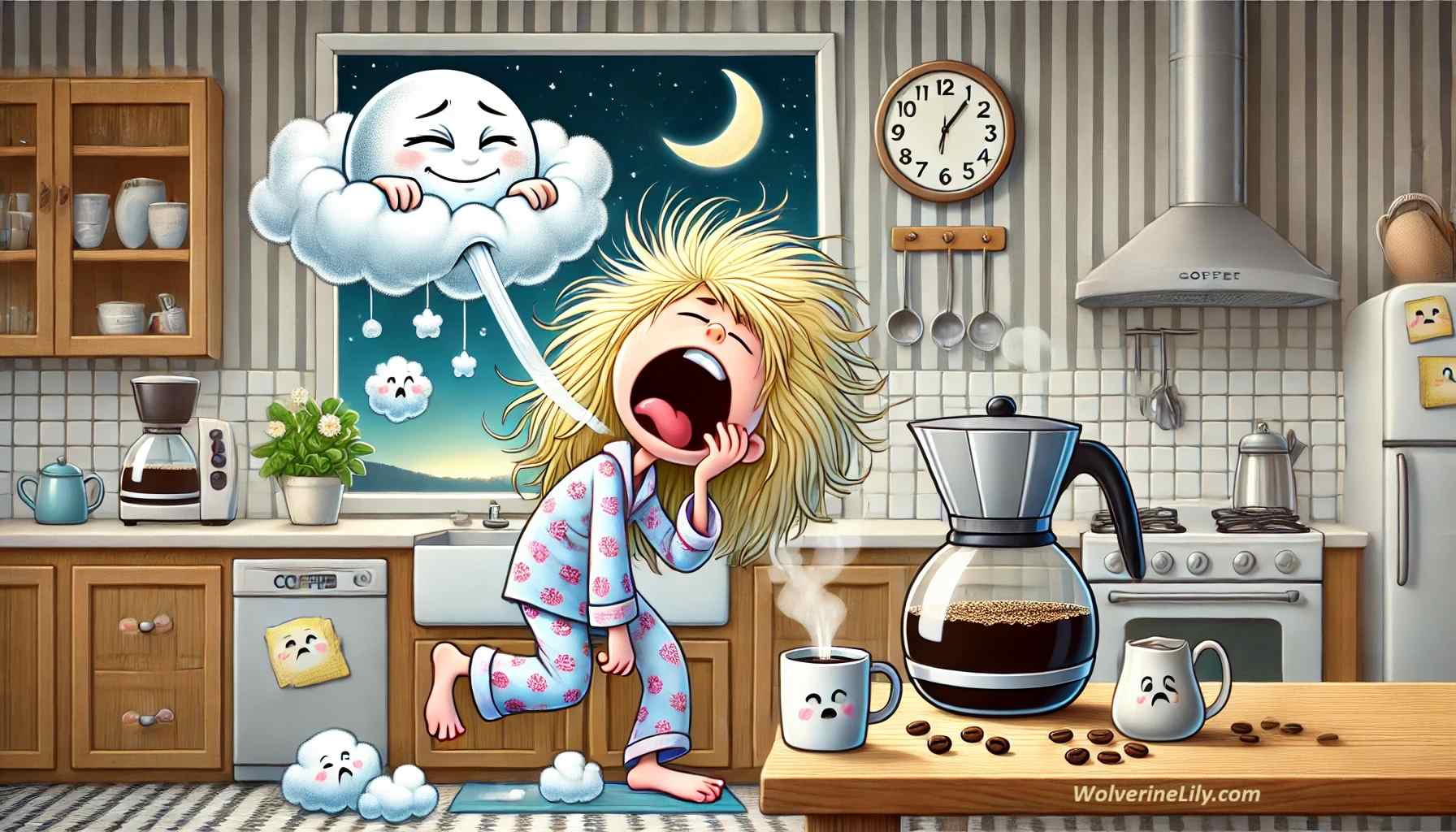
The alarm clock screams: It’s 5:00 am! Why must I wake so early again? Eyes half-open, stumble out of bed, Wonderful dreams still buzzing in my head.
Coffee’s brewing, but it feels too slow, I’m up at dawn? That’s a cruel show! I yawn so wide that I could swallow the moon, Who decided to begin a day this soon?!
The world’s still asleep—quiet—missing morning thrill, Getting out of bed is surely against my will. But up I go, and greet the day with a beat, Grateful for this life and all the chaos in it.
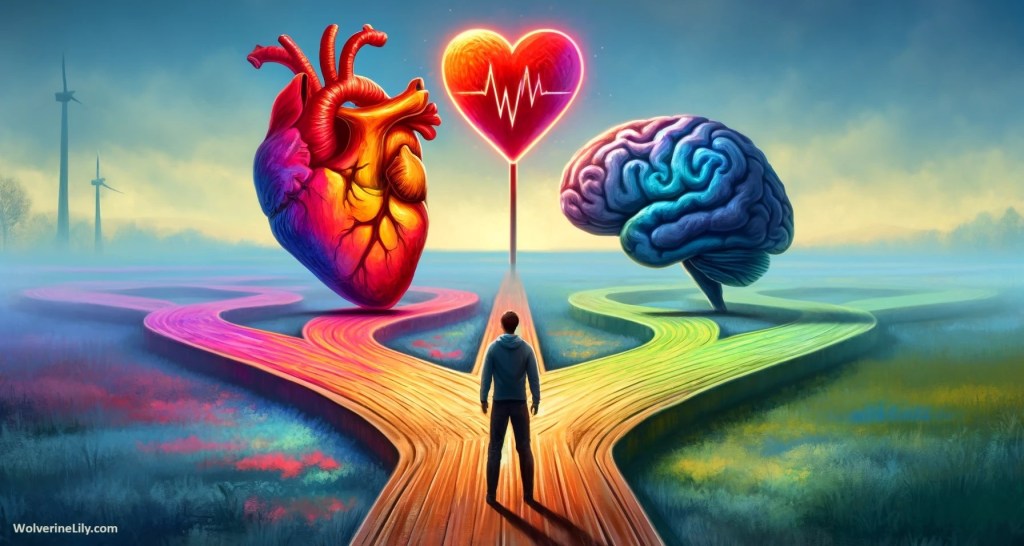
“Marry the one you love,” said the heart confidently. “If you listen to me, then you will know who and when.” “No,” said the brain. “Your heart is deceitful. Marry the person that is right for you.” “How do you know who is right?” I asked. “The right man is a good man. He treats you well and will take care of you. You will have a good life with him,” assured the brain. “But what about love?” I asked the brain. “Love is an abstract concept, undefined,” answered the brain. “It can be learned through years of mutual respect and understanding. This path provides stability and security, which are essential for a long-lasting relationship.” “What about passion, the intense feelings that make my heart race, and the sensuality that brings us closer?” I asked curiously. “Do what’s right for you. Feelings are deceptive,” reassured the brain. “Passion and sensuality can fade, but mutual respect and understanding grow stronger over time.” “How do I know what’s right and what’s deceptive?” I asked, confused. The brain did not answer.
“Let me ask my guts,” I said, seeking clarity. “Marry the one you love, my dear,” said Guts. “You can’t learn love; you have to feel it. If you follow my guidance, you’ll know deep inside it’s not deceptive. Following your heart brings happiness, joy, and deep emotional fulfillment, making life more meaningful.” “Guts, but what if he doesn’t love me?” “There is nothing you can do about his feelings,” Guts said gently. “If you love him but he doesn’t love you back, it will break your heart. Are you ready to take this risk, my dear?” So I asked my heart, “Are you ready to be broken?” but my heart remained silent. Then I asked my brain, “Can a life without love still be happy?” but my brain gave no response. “I don’t know what to do!” I cried in despair.
Then Guts continued, “If you listen to your brain, it’s a wise decision, but your heart will be empty. Stability and security come with this choice, but you might feel unfulfilled. If you listen to your heart, then you might get hurt. Love and passion bring joy but also vulnerability. But if you go with what I tell you, you’ll find a balance between emotion and logic, guiding you towards what feels fundamentally right.” Guts went on to say, “Listen to your heart’s calling. Consulting your brain means marrying for reasons other than love. Ultimately, the decision is yours. Trust your intuition to balance both perspectives.”
I did not follow my guts. Now, I find myself at a crossroads, wondering if the path I chose was truly the one meant for me. The puzzle of love, logic, and instinct continues to shape my journey, a riddle we all face regardless of gender. We make mistakes, our choices sometimes lead to heartbreak, or things turn out differently than we expected. Yet, we search and follow love again. These internal battles and the lessons we learn from them make us more empathetic and wise. Ultimately, if you choose logic, you may find yourself longing for love, as I am now. When children come into the picture, it can be difficult to turn things around, but these experiences further enrich our understanding and meaning of love.
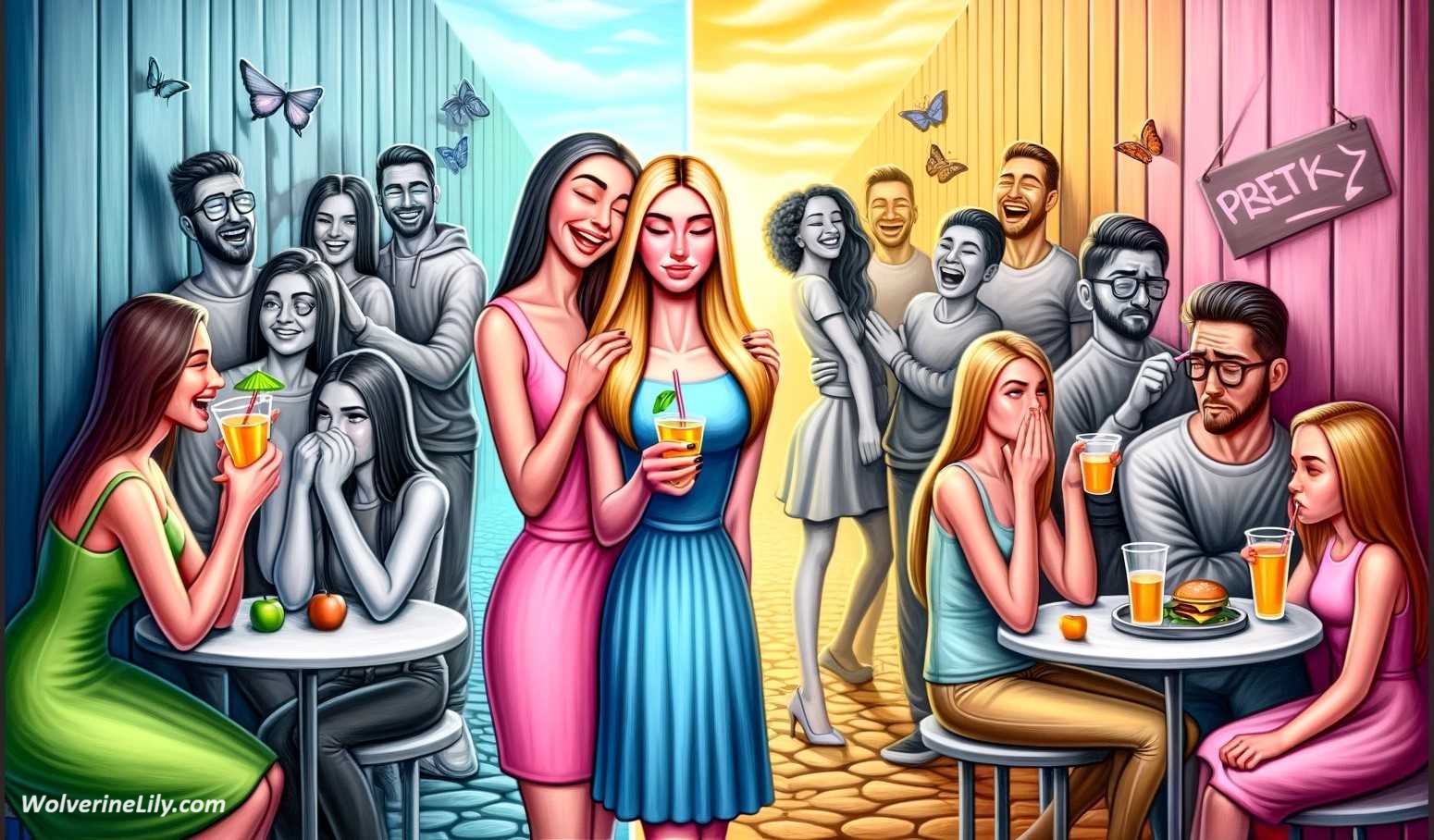
Have you ever come across the saying, “Pretty girls have it easier in life”?
Pretty girls seem to breeze through life, dodging traffic tickets, catching the eyes of admirers, and effortlessly securing drinks at bars. But what about the flip side? The not-so-pretty girls face a different reality. They become targets for bullies, often finding themselves disliked or disregarded. Their situation worsens if they wear glasses, opt for no makeup, or dress in unstylish clothes. Some of them shrink into themselves in the presence of pretty girls, feeling intimidated and staying quiet, hoping to blend into the background, unnoticed.
However, there’s another stereotype lurking in the shadows: the notion that pretty girls lack brains. With this stereotype, pretty girls are unfairly deemed as shallow or unintelligent. If they have blonde hair, the stereotype exacerbates, branding them as brain-dead. At work, pretty girls find themselves constantly scrutinized, as if everyone expects them to slip up. The tiniest flaw is magnified, seized upon as an opportunity to label them.
Yet, if you want a date then ask “that pretty girl.” In this scenario, going out with an attractive girl scores big. Also, Instagram favors pretty girls over intellectuals; girls in bikinis (or nude) tend to have way more followers than accomplished female scientists.
Therefore, which girl has more opportunities? Who has a better chance to meet Mr. Right? Who has it easier?
As I see it, the average person has the sweet spot. A girl must not be too pretty or too ugly because being very pretty intimidates while being too ugly repels. If you fall on either side of these extremes, you are likely – screwed!
Similarly, who has it better in school settings: the genius or the struggling student? Exceptionally smart kids and kids who struggle don’t blend in with others, and both are ideal targets for bullies because they are either too smart or not smart enough to fit in. Indeed, no matter where you are, how you look, or what industry or environment you find yourself in… the average person will fit in best because they do not “stick out.” If you are better than others in any category, you are likely discriminated against because of your exceptional abilities. This hatred is motivated by jealousy and fear. If you, however, fall behind others, then you are considered inept, unsuitable, and incompatible.
To thrive in today’s society, one cannot stand out in any category. If one falls on either side of the spectrum, whatever it is (smart or not, rich or poor, talented or not, hardworking or lazy, etc.), then he or she will face injustice.
Finally, would you rather be fit or fat? Who has it easier in life? Boy, I can tell you that I have seen it all! Ultimately, it boils down to feeling comfortable in your own skin, whether that means being fit or not. However, as a fitness advocate, I should encourage people to get fit. Stay on the fitter side but without falling into the extreme end of fitness, and here is why. The fitter I get, the fewer people talk to me in a gym. Fitter = less approachable. Perhaps, intimidation factors in? It sure can be difficult to make friends in a gym. Talking may be mistakenly perceived as “hitting” on others. It’s a fine line to walk, especially for single individuals who actually want to meet someone. On the other hand, having fewer acquaintances in a gym means less socializing and, therefore, less distraction and more time to work out. Bottomline: if you choose to get fit, or have a specific objective in mind, then surround yourself with people who support you and your goals.
So, the question lingers: who do you think has it easier in life? Pretty or ugly, or fit or fat?



 Wolverine Lily